For today’s food manufacturers, maintaining high levels of production débit is one of the critical factors for achieving profitability. Equipment sitting idle is considered a waste and is money lost that cannot be recovered. Processors face continuous competitive pressures from competitors and customers. To rise to these challenges, processors often must increase débit to meet new customer volumes, enter target markets, and take advantage of rising interest in new products. Inability to manage these challenges can mean quickly falling behind.
In the current environment, companies must do everything possible to maintain production at efficient levels while achieving cost, quality, and customer service goals. For managers and supervisors alike, having real-time actionable data directly from lignes de production provides invaluable insight into operating conditions. This data helps all employees ensure smooth flows and high levels of débit.
Performance metrics such as overall équipement effectiveness (TRG), temps d'arrêt and its causes, quality levels, order fulfillment rates, and other indicateurs (indicateur (KPI)) are important reflections of actual operating conditions. To obtain this data, forward-thinking companies implement Industry 4.0 technology solutions into their operations.
Integrating Factory Operations and Usine intelligente Software
A core element of today's rush to high-tech manufacturier is Usine intelligente software that integrates many elements of the processing lines and generates data needed for effective management. Analyzing this data helps companies understand and improve usine débit.
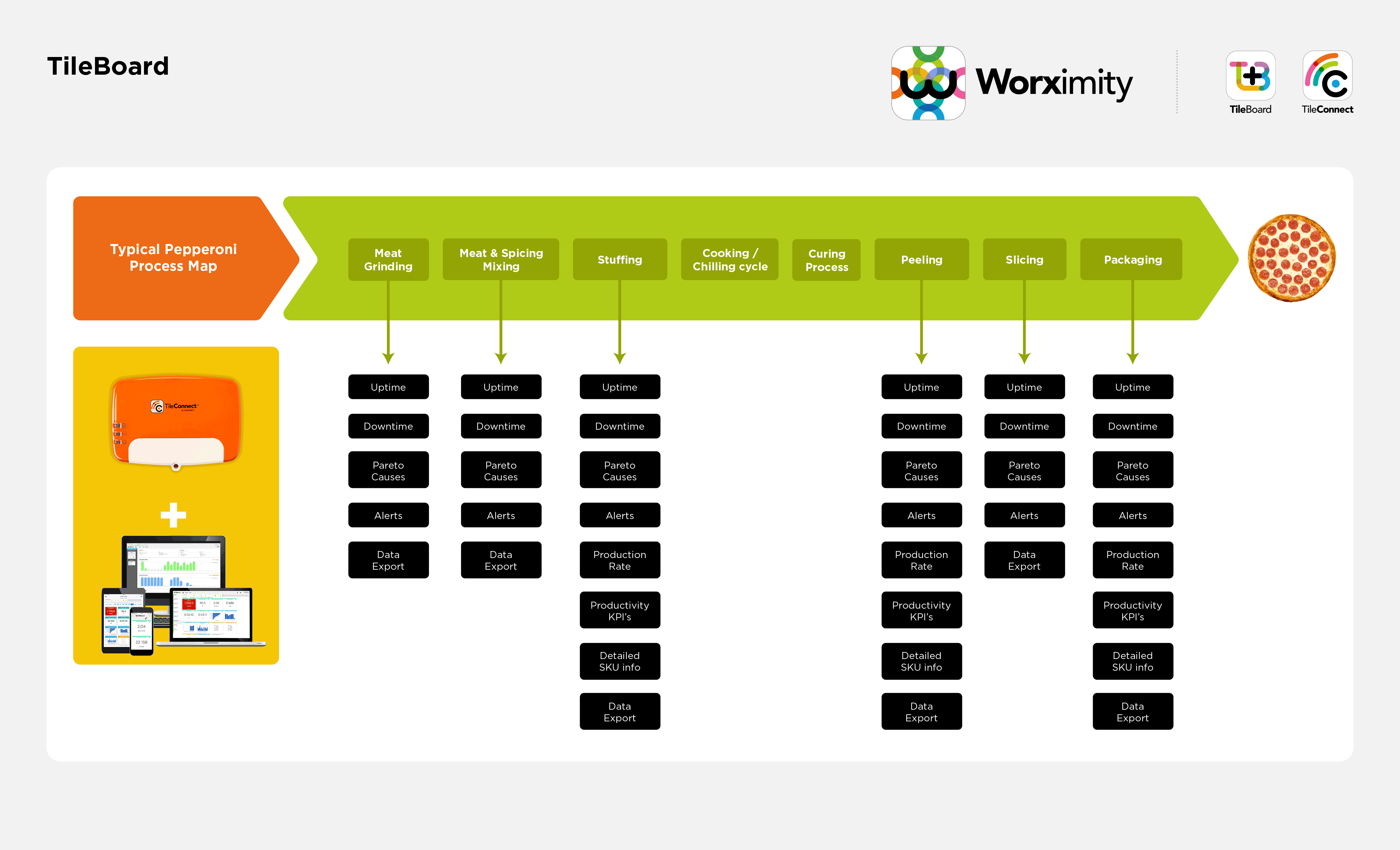
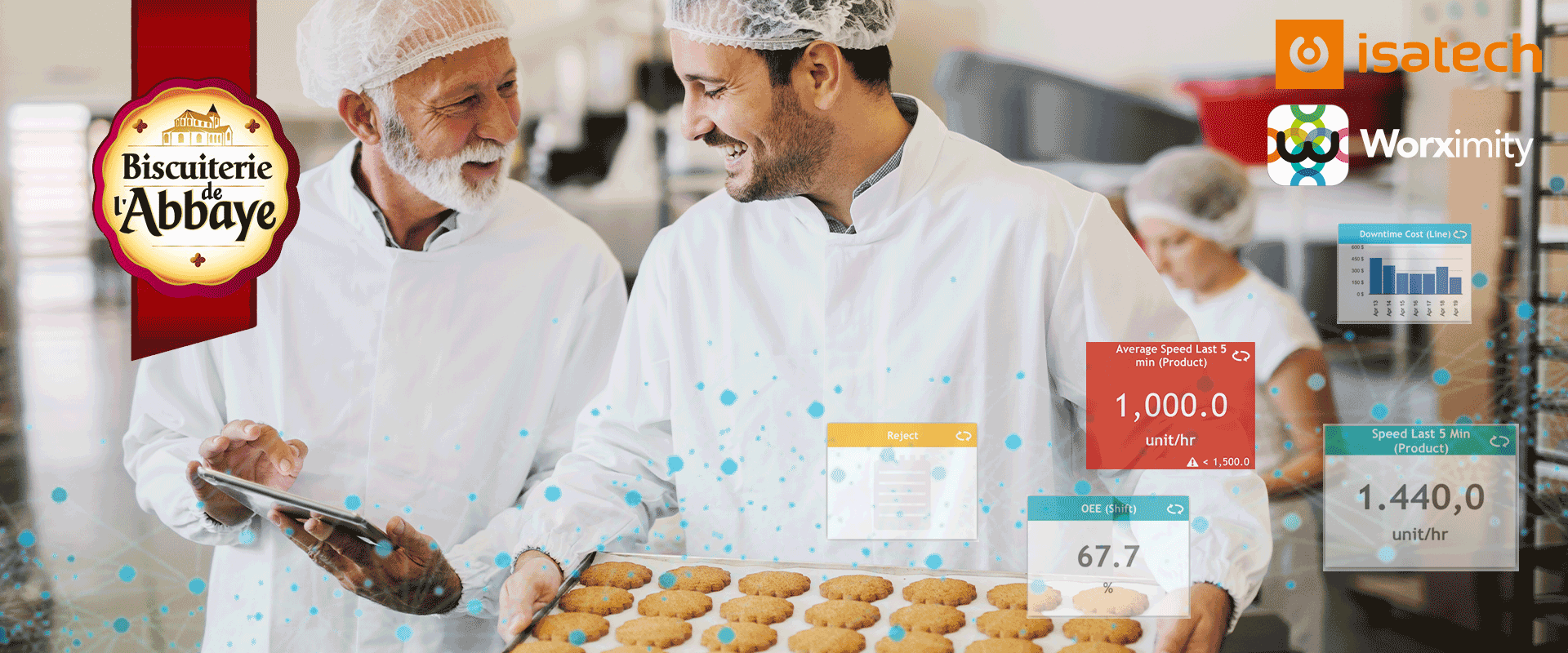
indicateurs (indicateur (KPI)) such as TRG, temps d'arrêt, quality levels, and débit are presented on monitors or TileBoards located throughout the usine. Employees can see up-to-the-minute operating measures and can take action should conditions deteriorate. This data supports managers’ efforts to increase débit. Increasing product volumes by converting temps d'arrêt to productive time and improving product quality are key strategies for meeting production goals and customer commitments.
Use Usine intelligente Results to Reduce Your Temps d'arrêt, Improve Your Quality, and Super-Charge Your Débit
Worximity’s usine intelligente software provides managers the information they need to monitor and improve both temps d'arrêt and quality. By analyzing these areas managers can identify hidden temps d'arrêt and resolve product quality issues. Both of these areas offer companies the ability to make changes quickly and see results within days or weeks.
1. Finding Hidden Temps d'arrêt Costs
When managers think about temps d'arrêt, the events that most often come to mind are équipement breakdowns, changeovers, and preventative maintenance activities. Each of these events offers plenty of opportunities to reduce temps d'arrêt, increase uptime, and increase débit. Programs such as reliability-centered maintenance can reduce breakdowns that interrupt production. Reviewing and analyzing preventative maintenance procedures often uncovers ways to build efficiencies into the procedures to minimize the time équipement is out of service. Changeovers can be studied to ensure each step in the changeover process is planned, coordinated, and well executed.
Nevertheless, capturing temps d'arrêt information using on-line, real-time data capture often reveals production losses that might otherwise go unnoticed. In many usines, processing lines will stop for very short periods while minor adjustments or changes are made. These types of stops, called micro-stops, can accumulate and represent significant amounts of lost production over a shift or production run.
Using Usine intelligente analytics software developed by Worximity Technology, the amount and causes of these micro-stops can be determined. Root cause analysis can then be carried out on the data and changes implemented to reduce the number and length of this category of temps d'arrêt.
2. Improving Quality
Making a bad part is worse than making no part at all. Using data from Worximity’s Usine intelligente analytics, volumes and types of rejected and reworked products can be analyzed to determine causes and solutions. If line adjustments are frequently required for such things as feeds, speeds, filling rates and amounts, and label équipement settings, analysis of maintenance practices or set-up procedures should be conducted. Processors can increase débit by improving quality and reducing rejects. Quality is one of the three components of TRG, and any reduction in the quality value will adversely impact overall TRG values.
Take Advantage of Worximity’s TRG Trial
To help you take the first step toward Industry 4.0 and improved débit, Worximity is offering an TRG trial. This trial allows managers and supervisors to witness firsthand the power of our Usine intelligente analytics system and to understand the benefits of receiving real-time, actionable data directly from existing équipement on your atelier de production. The trial includes everything you need to calculate TRG for one of your processes. Working with our consultants and using data from the trial, you’ll be able to gauge your process performance and see how your line stacks up against others in your industry. You'll also be able to see how TRG data can help improve usine-wide efficiencies and débit.
Worximity Technology is the industry leader in Usine intelligente solutions for today’s agroalimentaire processors. We offer customers state-of-the-art data collection and analysis systems to gather real-time processing data and generate performance metrics.
One of the most valuable production measurement tools available to managers today is TRG. This metric comprises three critical operating measures; performance, availability, and quality. Together, these constitute an excellent measure for tracking operating performance. To learn more about participating in our TRG trial, connect with us via our website.