The Client
How well do you really know your production floor? What if your plant’s biggest source of lost capacity wasn’t equipment downtime, but the assumptions you’ve come to accept?
In high-volume manufacturing, performance losses rarely come from major breakdowns. Rather, they are the result of small, repeated interruptions, a few minutes of downtime, and slight speed reductions. Everyday disruptions that, over time, quietly take a toll.
Regaining that capacity doesn’t necessarily require new equipment, added labor, or major capital investment. It often begins with maximizing existing equipment (OEE) and resources through better insight and more precise measurement. Once inefficiencies are clearly identified, they can be quantified, addressed, and converted into measurable gains.
At Daunat, a leading producer of ready-to-eat foods, that realization changed everything. Not because performance was lacking, but because it wasn’t fully visible. What followed was a fundamental shift, from estimation to precision, and a 23% increase in production.
The Challenge
Untapped Potential
Founded in 1976, Daunat is a major player in the French snacking market, producing sandwiches, wraps, salads, and burgers. With approximately 1,600 employees across multiple production sites, the company has built its reputation on operational performance and a strong commitment to continuous improvement.
Like many manufacturers, Daunat faced a familiar challenge: Performance was being managed but not measured with the accuracy needed to unlock its full potential. For nearly 50 years, production tracking relied heavily on manual processes as operators recorded downtime and production data on paper at the end of their shift.
“It was all highly subjective and often varied from one operator to another,” explains Philippe Bouvet, Director of the Daunat and Sevrey plants. “We realized that some downtimes had become accepted as normal. Five minutes here, ten minutes there. But without precise measurement, we couldn’t truly understand the impact.”
In some cases, downtime had become standardized, with recurring issues routinely logged as fixed durations regardless of what actually occurred on the line. And without reliable data, teams were essentially operating blindly. Consequently, small inefficiencies crept into daily operations, making them difficult to address or prioritize.
The issue wasn’t just to improve performance; it was to understand it clearly. Bouvet recognized that solving these challenges represented a significant opportunity.
“Before, we navigated mostly on intuition,” said Workshop Manager Grégory Chaisemartin. “Now, downtime is measured to the minute, speed losses are visible, and differences between lines and shifts are clearly understood.”
The Solution
Making Performance Visible
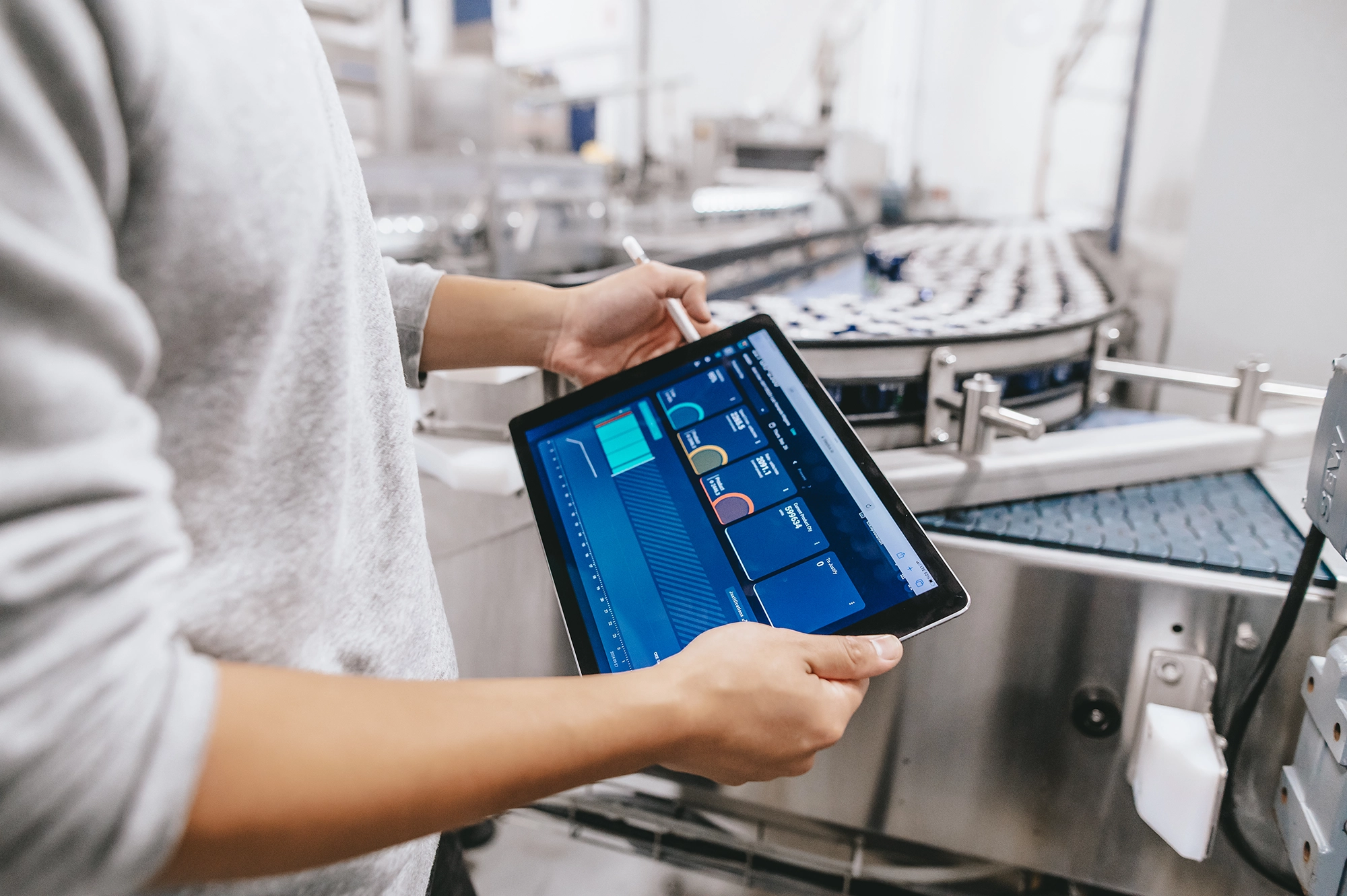
Daunat’s digital transformation began with performance monitoring. After discovering Worximity at a tradeshow, the system was tested on a few production lines. For the first time, teams could see performance in real time.
“What stood out was how easy the system was to implement and use,” Bouvet recalls. “There was no heavy rollout or long learning curve, and Worximity integrated easily into our existing workflows, replacing manual input.”
The decision to move forward came quickly. The system worked as advertised, deployment was straightforward, and it addressed a long-standing gap. When rolled out more widely later that year, the impact was immediate, not just in the visibility of data, but in how teams began to act on it.
“Before, we navigated mostly on intuition,” said Workshop Manager Grégory Chaisemartin. “Now, downtime is measured to the minute, speed losses are visible, and differences between lines and shifts are clearly understood.”
Beyond downtime, teams also began identifying hidden losses during production itself, such as lines running below target speed due to staffing gaps or minor disruptions that previously went unnoticed. As data became more precise, management could identify root causes with greater accuracy and take targeted action. Over time, downtime tracking evolved from a few dozen generalized causes to hundreds of detailed categories, enabling a much deeper level of analysis.
The Results
From Visibility to Daily Action
Today, performance data is embedded in Daunat’s daily operations, accessible on the shop floor and central to how teams manage production.
“We use it every day,” Chaisemartin explained. “It’s one of the first things we open. And the system remains open throughout the day, serving as a reference point for operators, supervisors, and production leaders.”
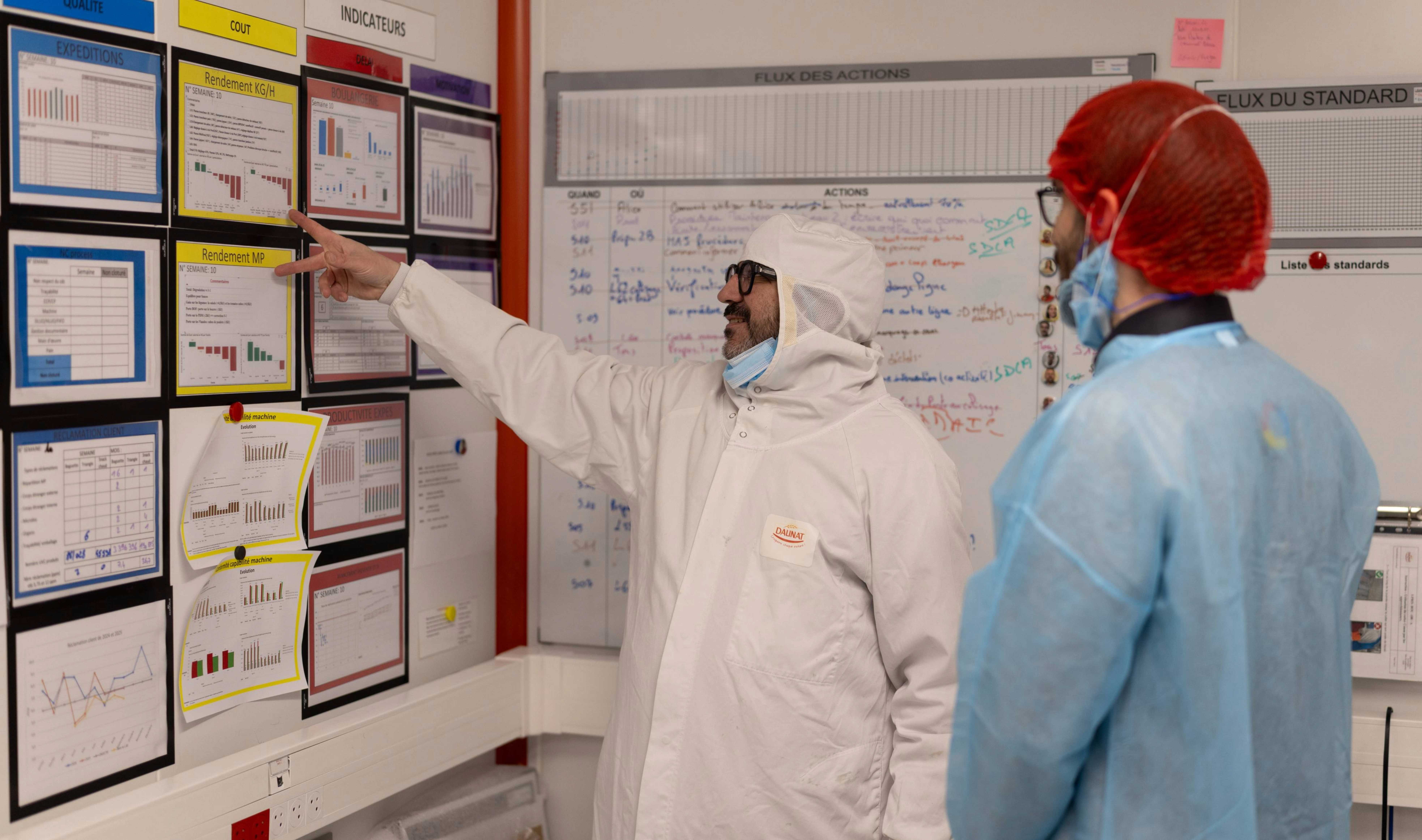
Now, weekly reviews follow a structured approach, focusing on the most impactful sources of loss, what happened, how often, and under what conditions. Rather than reacting to isolated events, teams prioritize actions based on measurable impact.
As analysis matured, Daunat also recognized opportunities to streamline how performance data was prepared and reviewed, reducing time spent compiling reports and increasing time spent addressing issues directly on the shop floor. What’s more, this shift has strengthened collaboration across teams. Operators and supervisors are now aligned around a shared, objective view of performance, enabling a more focused and disciplined approach to continuous improvement.
Measurable Gains
This transformation is not just cultural, it’s measurable, and increasingly visible at the line level. Within the first year of implementation, the company achieved:
- 23% Increase in OEE
- 9.3% Improvement in Availability
- 3.9% Performance Gain
These gains continued over time, including a further 6.5% improvement in the most recent period. In operational terms, the impact is significant. Based on a production standard of 2,400 units per hour, Daunat is now producing an additional 288 sandwiches per hour compared to its baseline performance. On certain lines, these gains were reinforced through more detailed, hour-by-hour tracking, making improvements both visible and repeatable in daily operations.
Ready When You Are
Our team of experts is ready to answer your questions. Let us transform your data into opportunities so you can do more with the resources you have.