
The fabrication industry has been continuously evolving. It all started with the invention of the steam engine in the 19th century, which led to the onset of mechanization. As time moved forward, so did the technologies that were used in fabrication. This has ultimately led to the onset of the 4th industrial revolution, commonly referred to as industrial revolution 4.0.
This new era in fabrication is marked by 4 key components: instrumentation, inter-connectivity, inclusivity, and machine intelligence. With industrie 4.0, fabrication usines are incorporating interconnected devices into their usines in order to collect, analyze and share données in temps réel. Also termed as IIoT, these technologies can be placed on individual machines to track performance and to monitor relevant KPIs.
As a manufacturier, it is important for you not to be left behind in this industrial revolution 4.0. To get onboard, you need to embrace new technologies and use them to increase the efficacité of your usine operations. This means promoting inter-connectivity of devices throughout the usine, collecting and sharing données in temps réel, and making decisions based on temps réel visibility of the usine.
So what should you do to make sure you get onboard the 4th industrial revolution? Here are 7 key steps you must take.
1. Embracing changes and evolution in technologie
The first thing you must do to get onboard with industry revolution 4.0 is to embrace changes in the fabrication sector. You must be able to recognize how these new interconnected devices can significantly increase the effectiveness of your production processes.
Robotics, Artificial Intelligence (AI) and Augmented Reality (AR) are all at the forefront of spearheading this industrial revolution through automation. Tasks that were previously too complex or too cumbersome to be carried out manually can now be carried out by robotics and AI. 3D printing also has the capability of revolutionizing how items are produced and supplied to the end-user.
As a manufacturier, you need to embrace these changes and to plan your development strategy around these emergent technologies in order to truly benefit from industrie 4.0.
2. Turn your usine into a usine intelligente
It will be impossible for your fabrication usine to truly embrace industrial revolution 4.0 without turning your usine into a usine intelligente. A usine intelligente is one that leverages the benefits of IIoT technologies in its daily operations. IIoT is a network of interconnected devices that are strategically placed throughout the usine to monitor équipement in temps réel, collect and analyze données, and improve the overall visibility of the entire usine.
Manufacturers who utilize these technologies are able to monitor their équipement to prevent temps d'arrêt, collect high qualité données that will result in better business decisions, and redirect the efforts of their employees towards more technical processes within the usine.
To get onboard with the new industrial revolution, you need to incorporate these new technologies into your usine.
3. Improve the visibility of floor processes
A key step that any usine must take to get onboard with industrie 4.0 is to improve the visibility of its floor processes. This means using interconnected and portable devices to keep track of critical functions in the usine and to share données in temps réel.
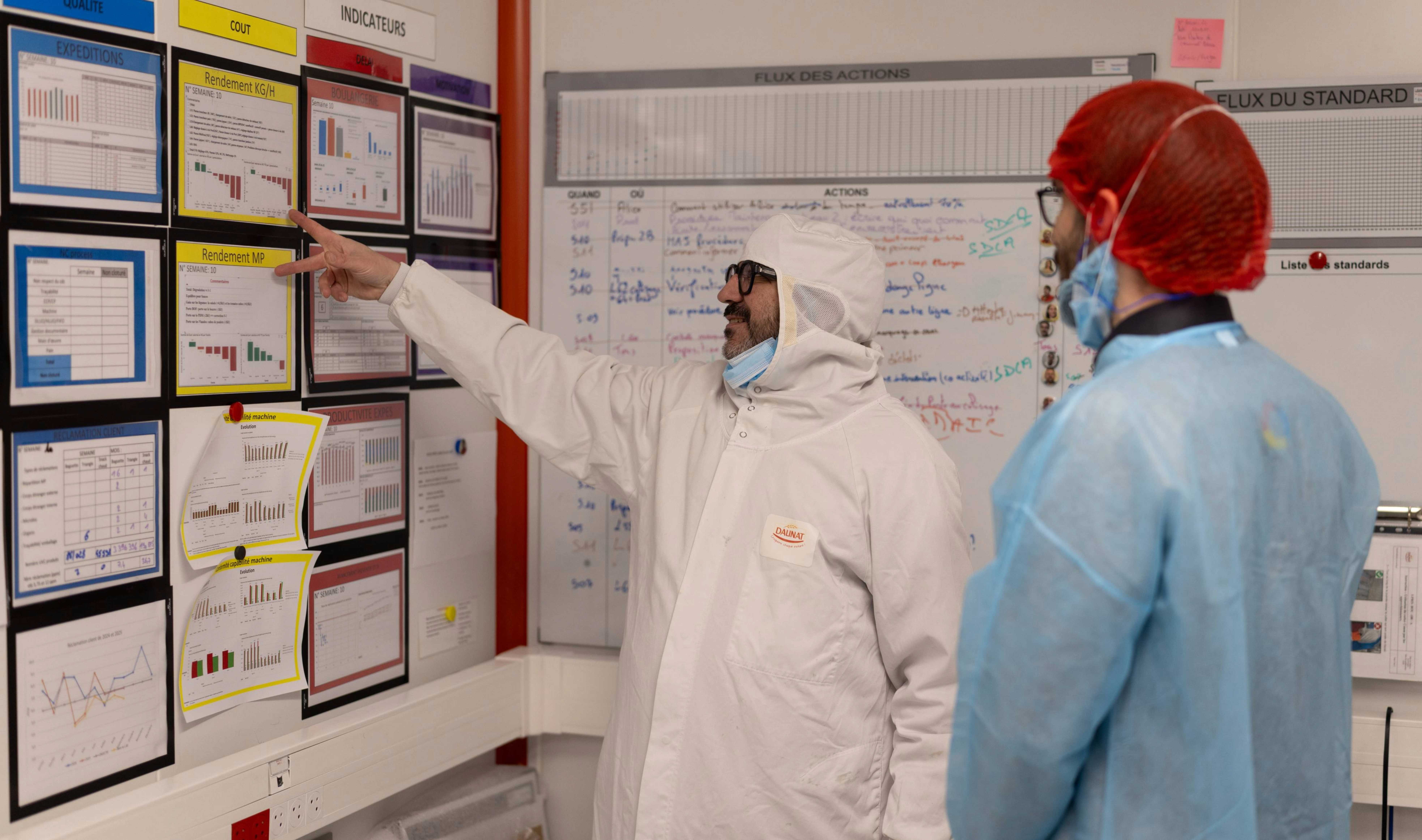
Take steps to equip your team with digital tools (such as mobile devices and digital tableaux de bord) that will improve the efficacité of their activities. Data should also be displayed on the usine floor to keep all employees on-board with on-going processes.
By equipping your team with the tools they need to carry out their functions with increased efficacité, floor processes will become more visible to the entire usine and better decisions will be made in temps réel.
4. Make données-driven decisions
One of the greatest benefits of industry revolution 4.0 is the ability of manufacturiers to make données-driven decisions. Decisions that are made based on temps réel and high qualité données tend to be more objective than decisions made from estimations and subjectivity. industrie 4.0, through IIoT technologies, enables usines to collect données from multiple devices, analyze this données and make decisions based on the results.
These decisions can also be made in consultation with team members and the performance of various systems within the usine.
5. Valuing and nurturing innovation
Getting onboard industrie 4.0 also involves valuing and nurturing innovation. New innovations in the industry are revolutionizing how we have traditionally viewed our products and services. For example, technologies being used in cars are following the trend of turning your vehicle into an automated machine that can integrate with your smartphone and other mobile technologies to deliver critical services.
To keep up with these rapid innovations, you need to hire high qualité talent that will help you transform your outdated processes. Being on the lookout for computer and electronic engineers, données scientists and fabrication experts can help you implement the latest and most effective technologies in this new industrial revolution.
6. Implement scalable technologies
It can first seem overwhelming to implement industrial revolution 4.0 into your usine. The secret is to start small by using scalable technologies that you can evolve with. For example, investing in SaaS and other cloud solutions will provide your company with a flexible platform that can evolve as the needs of your business expand.
Scalable technologies also allow your usine to build on their knowledge of IIoT, données science, and AI in order to maximize on the use of smart technologies within your usine.
7. Increase collaboration with partner companies
Industrial revolution 4.0 is grounded in collaboration. Not only collaboration with IIoT technologies, but with other companies as well. To deliver high-qualité products, you need to work closely with your suppliers, customers, and employees to optimize all relevant areas of the value chain.
Collaborating with all the stakeholders of your usine processes enables you to implement a framework that will benefit all the parties involved. For example, you can use IIoT to integrate your inventory with your suppliers so they can automatically get notified when your inventory is running low. This leads to lower inventory coûts and faster fulfillment of customer orders.