Le client
Diversity has its advantages, especially in business where expanding product and service offerings can drive growth, increase resilience, and strengthen customer relationships. But inside a dispersed manufacturing operation, differences can quietly become a liability.
As organizations expand, maintaining consistency becomes increasingly challenging.Processes evolve independently, teams develop unique approaches, and reporting methods can vary from site to site. Over time, these differences make it difficult to compare performance, identify improvement opportunities, and widely leverage best practices.
Le défi
Cooperl, one of Europe's leading cooperative agri-food organizations, was beginning to experience these challenges first hand. Across production sites, inconsistent tools, processes, and reporting methods were creating growing gaps. Comparing performance has become increasingly difficult, making it harder to identify improvement opportunities.
• Inefficiencies slipped through the cracks
• Best practices stayed local
• Decisions were based on inconsistent data
More than operational, these differences were impacting performance, visibility, and continuous improvement. With a strong culture of industrial excellence, Cooperl had always prioritized performance. But as the organization grew, it became clear that manufacturing data wasn't consistently captured, interpreted, or leveraged.
“Two factors separated Worximity from the pack,” Bastien explained. “The first was usability. The interface is intuitive and visually clear, making it easy for operators to adopt quickly. The second was ease of deployment. Even in complex conditions, including remote implementation during COVID, we were able to install and configure the system quickly and independently after an initial setup.”
La solution
Fragmented Data, Inconsistent Measurement
Across the company's CSA division, performance management was already an important part of daily operations. Teams actively tracked production performance and worked to improve efficiency, but as Cooperl expanded across multiple sites, facilities adopted varying approaches to collecting, analyzing, and reporting operational data.
Some sites employed in-house tools, while others used manual processes. While these methods provided valuable operational insight, they also created challenges when comparing results across facilities. Metrics were not always measured or interpreted the same way, making it difficult to establish a common view of performance throughout the division.
As a result, benchmarking sites required significant effort, best practices were harder to share, and opportunities for improvement were more difficult to identify at an organizational level. Teams were generating useful data, but the lack of a standardized framework limited the ability to fully leverage those insights across the business. Cooperl wanted to build on its existing performance management practices by creating a more consistent, standardized approach to performance management across every site.
For Industrial Performance Manager, Bastien Ballan, this challenge was personal. Having launched his career as a line operator, Ballan had seen firsthand the impact of structured downtime tracking and performance monitoring. Later, while managing a factory project in China without those tools, the gap became impossible to ignore.
Returning to France in a cross-functional role, he recognized an opportunity to align performance measurement across the organization and create a shared operational language that every site could use. That realization became the catalyst for change, and the starting point for identifying what Cooperl needed next.
Simplicity,Consistency and Scale
The goal was to create a consistent, reliable, and actionable view of performance across every site without adding complexity. For this, Cooperl needed a solution that could standardize performance tracking while remaining simple enough for operators to use every day. It had to provide reliable, real-time data, integrate naturally into daily routines without disrupting production. As the company began evaluating solutions, Worximity quickly emerged as a strong fit.
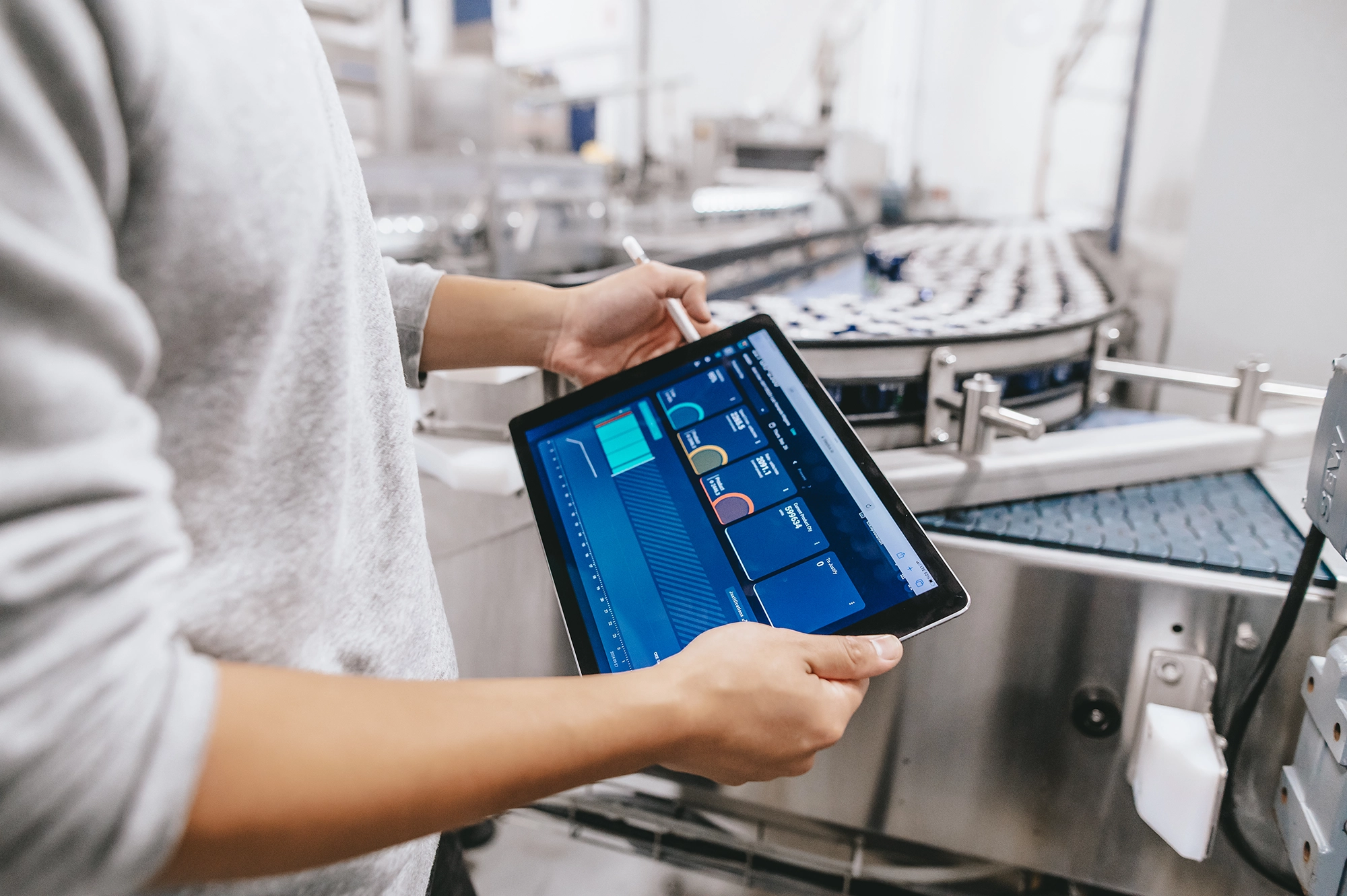
"Two factors separated Worximity from the pack," Bastien explained. "The first was usability. The interface is intuitive and visually clear, making it easy for operators to adopt quickly. The second was ease of deployment. Even in complex conditions, including remote implementation during COVID, we were able to install and configure the system quickly and independently after an initial setup."
This combination made Worximity not just a viable solution, but a practical one for real production environments.
Fast Deployment, Strong Support
Implementation began with a pilot before expanding across the division. Following the initial rollout, teams were able to deploy the solution across additional sites with a high degree of independence. Worximity's support played a key role throughout the process, not only in the early stages, but as adoption spread. Regular collaboration, ongoing check-ins, and structured quarterly reviews helped ensure each site continued to mature in how it used data.
"Our interactions with Worximity ensured that each site could both adopt the tool effectively and continue progressing," Bastien noted. "The implementation team was always available, professional, and engaged in improving the solution with us."
Les résultats
A New Way of Working
What began as an effort to standardize performance measurement has evolved into a common operating framework. Teams now share a consistent view of operations, making it easier to identify opportunities, compare results across sites, and drive continuous improvement.
"With Worximity, everyone is working from the same performance data," Bastien explained. "Production, maintenance, and management teams can quickly identify opportunities, align priorities, and focus on where they will have the greatest impact."
Rather than reinventing its operations, Cooperl strengthened an already established culture of industrial excellence by creating a unified approach to measuring and improving performance. With standardized OEE tracking and reliable real-time data, the organization has built a stronger foundation for operational excellence, smarter decision-making, and future growth.