4/7/18

The 3 Central Tasks of Data-Driven Transformation

BCG's cost-effective and evidently successful three-step approach addresses a timeline for digital transformation in companies across sectors. The approach begins with pilot projects of rapid digitization to a final data governance system leading to a full-fledged digital transformation.

Analytics
Industry 4.0
The 3 Central Tasks of Data-Driven Transformation


Data-driven transformation has taken to drive change in public and social sectors. Such change has motivated most executives to find reliable ways to propel their companies into data-based futures. Along with motivation, fear to keep up with competitors and ensure survival of their businesses pushes CEOs to implement a focused, pragmatic, and agile approach to data transformation. Working with different industries, BCG has addressed this challenge and developed a cost-effective, sustainable, and progressive three-phase approach:
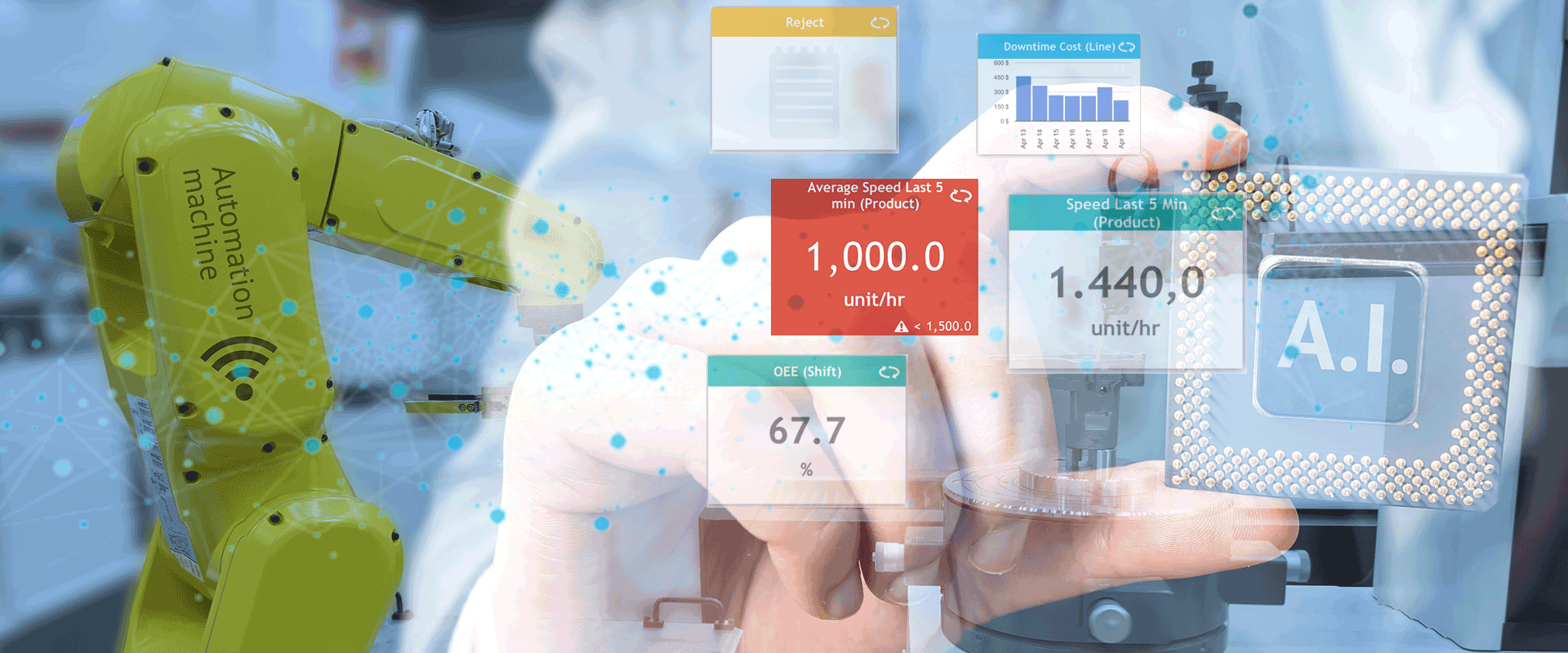
 

Worximity - Data driven transforamtion with Smart Factory technologies

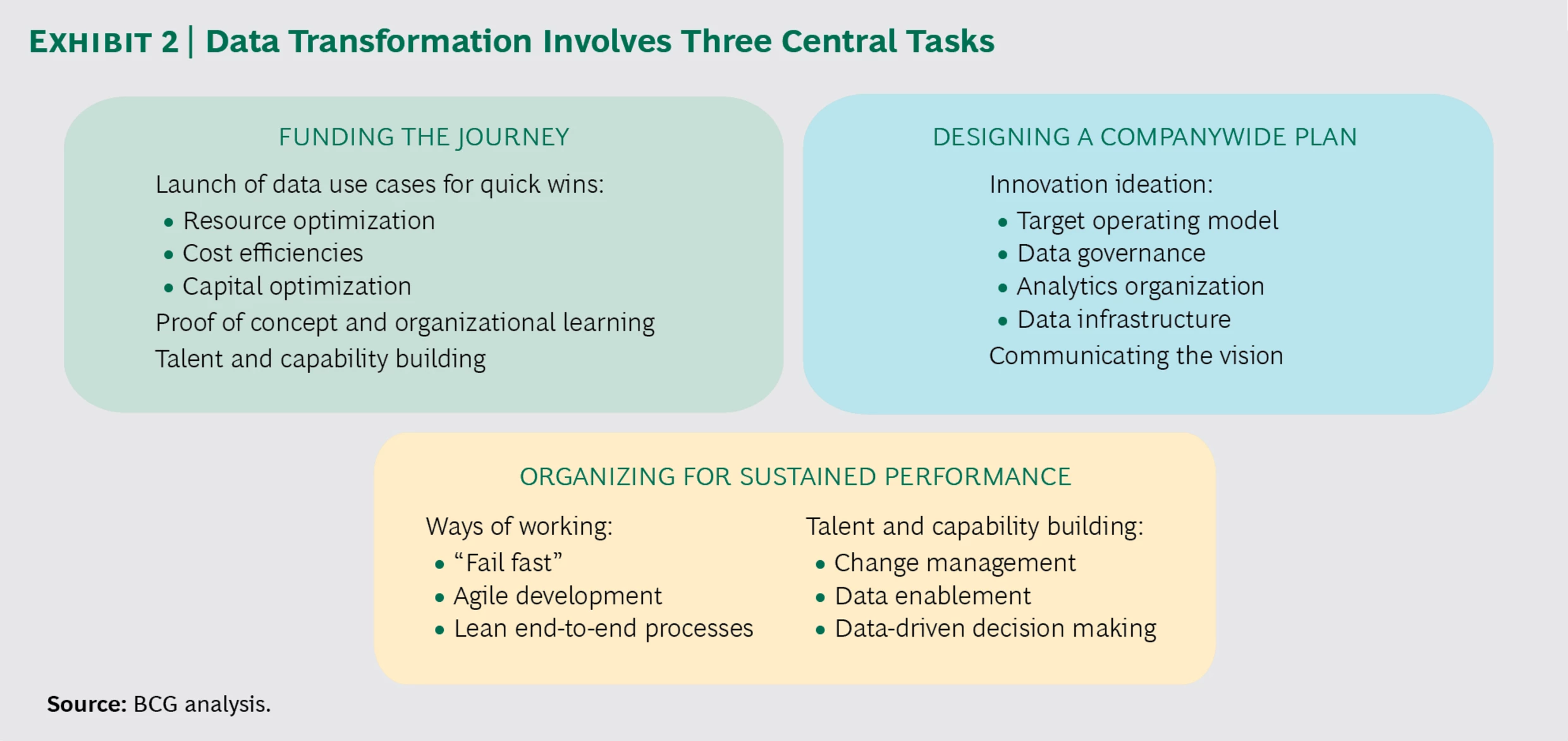
1. Funding the journey 

Entails laying the foundation with rapid digitization efforts that address the basics of broader transformation and deliver returns that can fund later phases. The benefits of these pilot projects help to show how an example company can benefit from digitization in the long run.

2. Designing a company-wide transformation 

Focuses on optimizing performance through digitization. In this phase, companies should draw on wins from phase one and create a detailed roadmap for extending transformation to other areas of the enterprise. Additionally, identifying benchmarks to digitize functions and operations allows companies to prepare for a full-fledged digital transformation. In this phase, it is also helpful for the organization to start “industrializing” data analytics—using analytics as a resource for each operation.

3. Organizing for sustained performance 

Involves building long-term systems and working towards using new data-driven strategies. As the company continues to sketch its transformation roadmap, it should standardize data-based systems for an effective output. Finally, to ensure sustainability of adopting digital processes, companies should constantly encourage new ways to use data.
 

Data-Driven Transformation_ex02_tcm-156856


SOURCE:  https://www.bcg.com/fr-ca/publications/2017/digital-transformation-transformation-data-driven-transformation.aspx?linkId=52354074&redir=true

Want to learn more?
Download the ebook
Related blog articles

Related articles

Back to the blog
Thank you! Your submission has been received!
Oops! Something went wrong while submitting the form.
12
Apr 2018

Smart Factory Analytics: Creating New Business Opportunities

English
29
Oct 2021

Your Factory's Digital Manufacturing Roadmap: A 5+ Item Checklist!

English
31
Jul 2018

3 Ways Monitoring & Analytics Maximizes Operations Performance

English

Related articles

Back to the blog
Thank you! Your submission has been received!
Oops! Something went wrong while submitting the form.
12
Jun 2018

3 Obstacles preventing Food Manufacturers to embrace IIoT

In the food industry, manufacturers are embracing the IIoT as a way to trace products along thei supply chain journey, monitor equipment and follow operations in real time. The food industry has been slower than other manufacturing industries to adopt the IIoT because of perceived obstacles.

English
20
Jun 2018

6 Digital Technology Themes for Manufacturing Leaders

Here are themes and trends that progressive manufacturing leaders are evaluating in the industry.

English
30
May 2018

4 Main Challenges of IIoT Adoption and What Can Be Done About Them

According to Statista the global manufacturing industry is set to spend over $890 billion for IoT technologies by 2020. However, despite this huge growth in the applications of said technologies, there are still challenges that prevent their adoption on a mass scale.

English