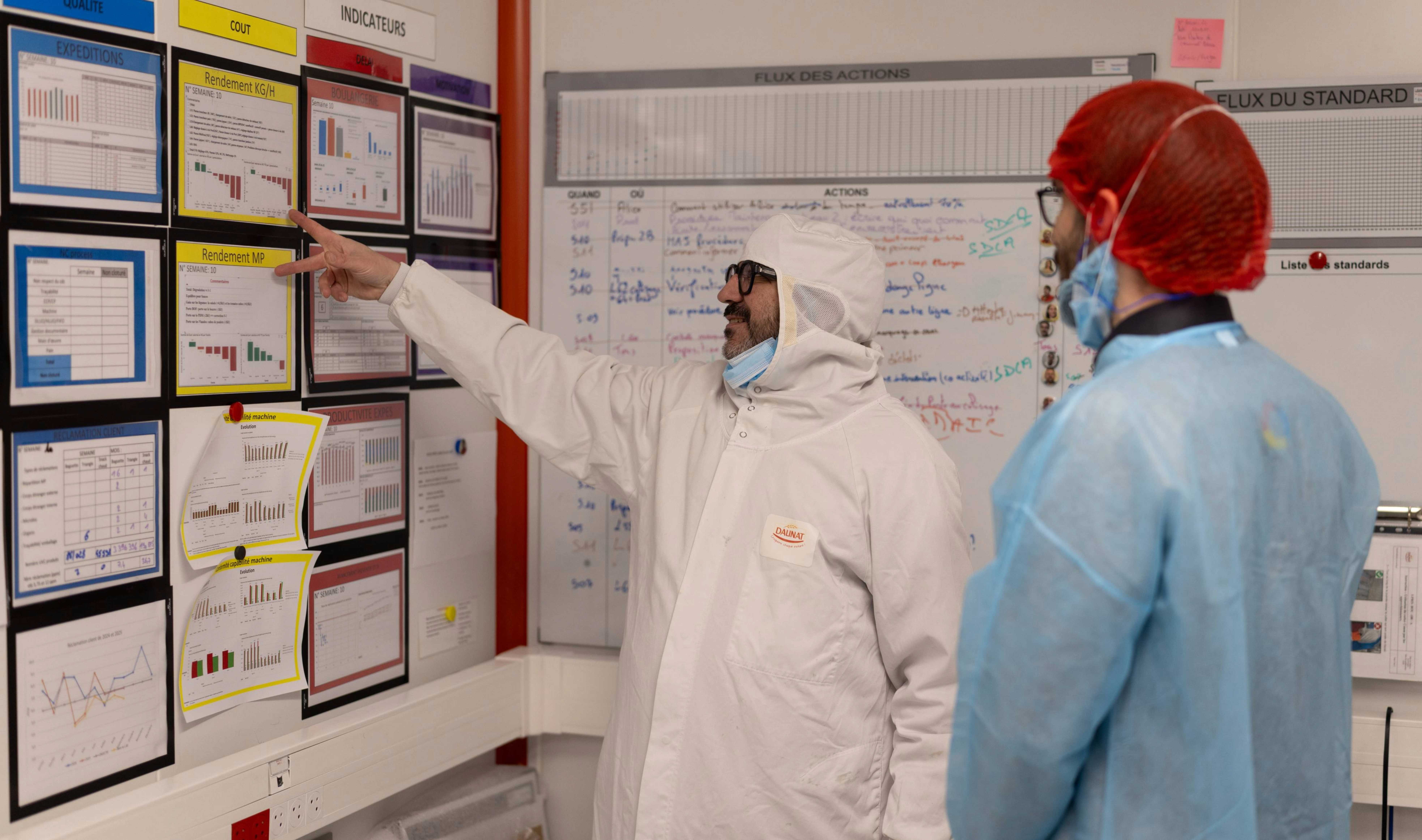

Beyond engaging employees around organizational goals, plant floor dashboards provide fast, real-time access to information. Dashboards are the ideal tool to engage employees on the shop floor, but they also reshape the way people work. Technology is increasingly present in the manufacturing sector, new jobs are emerging, and new skills are required. According to a 2016 World Economic Forum report titled Future of Jobs, more than a third of the skills that will be essential in 2020 are not required of current employees. Put differently, the skills that will make companies productive will change — and quickly. Here are the top skills that will come to the forefront within Industry 4.0.
1. Innovation and creativity
Technological innovation has become a must in manufacturing. Innovative companies are looking for employees who treat innovation as a priority — creative employees who challenge the status quo. While products sold by manufacturers must keep getting more innovative, ways of working must also evolve. Employees need to be creative in the improvements they bring to internal processes (Hecklau et al., 2016).
2. Interpersonal skills
Collaboration and teamwork will become considerably more important in the coming years. The workforce of the future will need to learn how to collaborate frequently with experts from different fields. On a single project, collaboration may involve experts in automation, continuous improvement, software development, productivity, and more (Board of Trade of Metropolitan Montreal, 2017). The ability to share knowledge and persuade will also be in demand, along with emotional intelligence (World Economic Forum, 2016).
3. Technical skills
The Industry 4.0 workforce comes from robotics, artificial intelligence, big data, and the Internet of Things. These fields demand sharp expertise and deep knowledge of new technologies. Production automation transforms jobs, and tasks that were once manual and repetitive become automated and more complex to solve when issues arise. Complex problem-solving is therefore a skill prized by innovative manufacturers (Board of Trade of Metropolitan Montreal, 2017). To these skills add notions of cybersecurity. Industry 4.0 employees must be familiar with IT security and compliance. Recent technological advances give innovative manufacturers access to an impressive volume of data — commonly known as big data. Companies must, however, identify talents who can make sense of this data and use it optimally (Hecklau et al., 2016).
The change champion as a solution to skills development?
With talent shortages, manufacturers must rely on the talent already in place to innovate and boost productivity. To do this, developing the skills of current employees is essential. A change champion is the ambassador of change within the company; they communicate the benefits of change to different stakeholders and the reasons behind the transformation. Since the change champion plays a key role in change management, it becomes attractive to rely on the same person to identify skills development opportunities. The change champion can make sure current employees grow and gain the skills required to boost productivity.
Identify your own change champion to help develop your employees' skills by downloading the guide below.