As Industry 4.0 technologies develop, manufacturers are becoming far more efficient and productive. Industry 4.0 refers to the next revolution in manufacturing and is sometimes called the "fourth industrial revolution." Industry 4.0 is driven and enabled by a number of recent innovations and developments that creative technologists and early adopters of new technologies in manufacturing are using to unlock unmatched gains in productivity, efficiency, and manufacturing quality.
Industry 4.0 today
The Internet of Things (IoT) is built using cloud connectivity and software to connect endpoint devices to one another, to automation control systems, and to human interfaces such as mobile devices and computer dashboards. While many IoT developments focus on consumer products like the Nest thermostat or the video-camera doorbell, a large share of IoT deployments target the industrial sector. These industrial IoT products and solutions fall under the IIoT, or Industrial Internet of Things category. Beyond IIoT technologies, Industry 4.0 is also driven and enabled by recent developments such as virtual reality equipment (like Oculus, applied in an industrial context) that enable efficiency-boosting applications such as just-in-time (JIT) training on new processes or immediate access to manuals and schematics to solve machine issues. Drones, cobots, mobile computing, and of course the ability to deploy cloud applications at scale are all key components of Industry 4.0 progress.
The convergence of these forces and their application in real-world environments delivers many benefits to manufacturers adopting Industry 4.0 technologies.
Industry 4.0 is reshaping how manufacturers operate as well as the methods used by operations managers. Old manual methods for measuring performance are no longer competitive. Automation dramatically improves operating speeds to the point where prior manufacturing methods are outdated. To stay current, equipment is now fitted with smart wireless sensors that collect real-time data for on-the-spot analysis or downstream trend analysis. Decisions can be made much faster and risks managed proactively thanks to these new manufacturing technologies. Today, Industry 4.0 lets operations leaders keep applying the process-improvement techniques they have always used — but with more accurate information delivered much faster than before. Productivity can be maximized while waste and manufacturing costs are reduced, keeping manufacturers competitive.
Broadly speaking, opinions on Industry 4.0 have shifted radically since the term was coined in 2011. A 2014 study found that nearly all respondents felt their company was not ready for Industry 4.0, and a majority reported no work had yet begun in anticipation of this industrial transformation. Just two years later, in 2016, PwC's "Global Industry 4.0" survey showed that investment in Industry 4.0 was already substantial, and today, adopting Industry 4.0 technologies is considered a top priority for any industrial company. Manufacturers are making the Industry 4.0 shift because they can quickly and significantly cut costs by improving efficiency, working proactively, and maximizing resources. Industry 4.0 is regarded as the next industrial revolution and is driving remarkable gains in operational efficiency and value creation.
Adoption of IoT devices alongside cloud-based data analytics and improved automation of manufacturing processes is reducing waste and increasing efficiency across a growing number of plants as companies adopt Industry 4.0.
Industry 4.0 — the future of manufacturing and operations
Even as these seemingly advanced Industry 4.0 solutions proliferate, we are only scratching the surface of what is possible with Industry 4.0.
Industrial automation has been used for decades to remove labor costs and increase productivity and efficiency. However, what most people picture when they think of automation is an automotive production line with 6-axis robots used for assembly, welding, and painting of car bodies.
Example of a 6-axis robot in automotive production
However, robotic technology in manufacturing is now advancing rapidly. Cobots are next-generation robots designed not to operate autonomously, but to work alongside workers rather than replace them.
Example of a cobot in an industrial setting
Beyond cobots — which act more like automated assistants and force multipliers for individual workers than what we think of as traditional robots — fully autonomous robots used in manufacturing are advancing quickly. The advancement of fully autonomous robotic systems, such as Amazon's warehouse robots, means that in some cases robots no longer require human intervention, communicate with a central control system and with one another, and can operate fully autonomously even when the plant is in "lights out" mode.
Example of autonomous warehouse robots
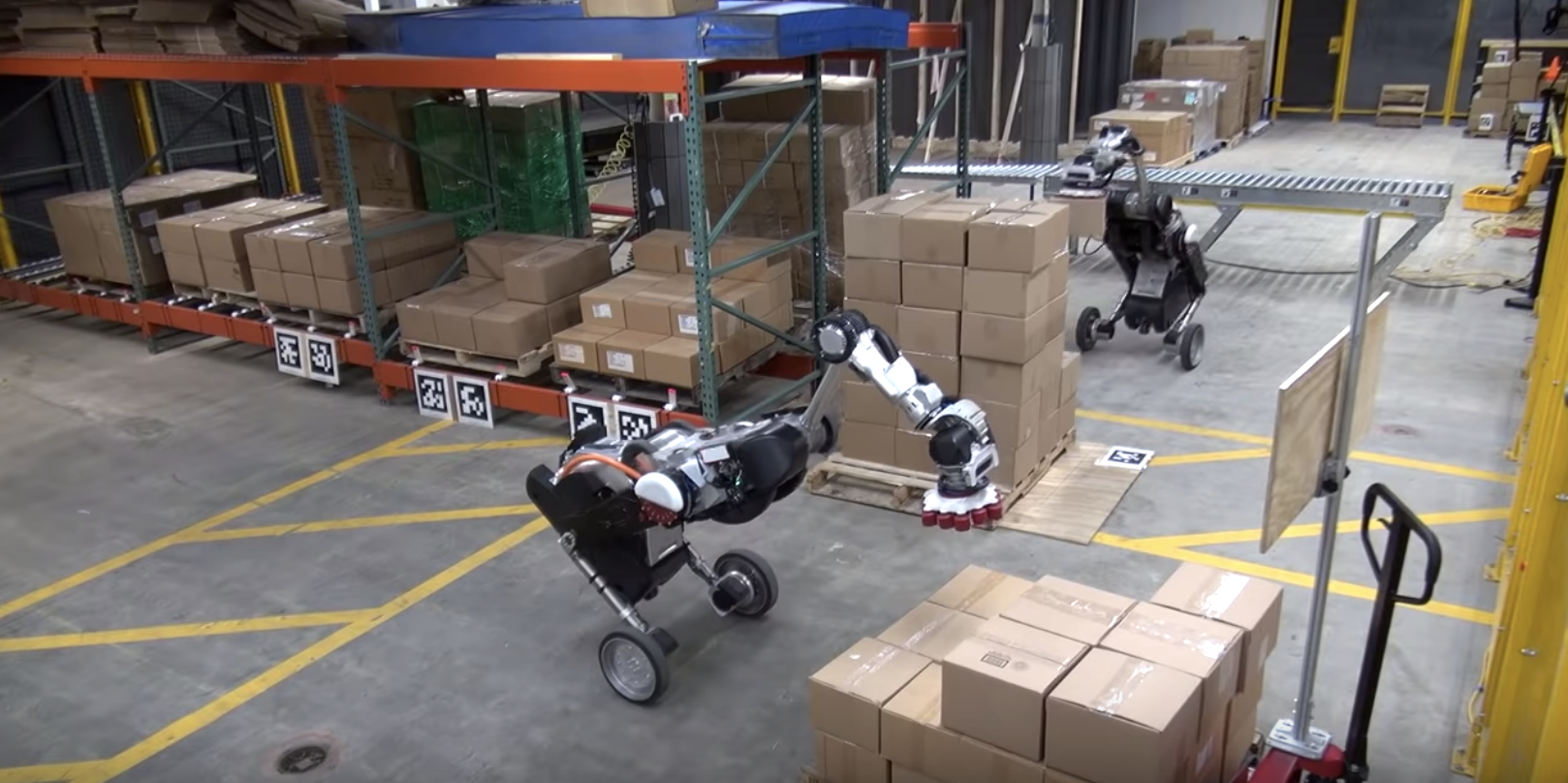
Boston Dynamics is pushing a vision far beyond a Roomba-style warehouse robot to build robots that mimic workers in a warehouse or even a construction environment, which raises many navigation and operational challenges.
Example of a fully autonomous industrial robot
Example of a fully autonomous construction robot
The use of autonomous equipment, robots, and vehicles is one of the ways Industry 4.0 is reshaping manufacturing as we look to the future. Autonomous robots and cobots increase operating speeds, drive a more efficient workflow, and reduce costs.
Advanced industrial robotics will need data and information to operate effectively, just as today's plant workers do.
It makes no sense for a robot to fetch and deliver raw materials to a fixed machine that is down because of an unplanned stoppage.
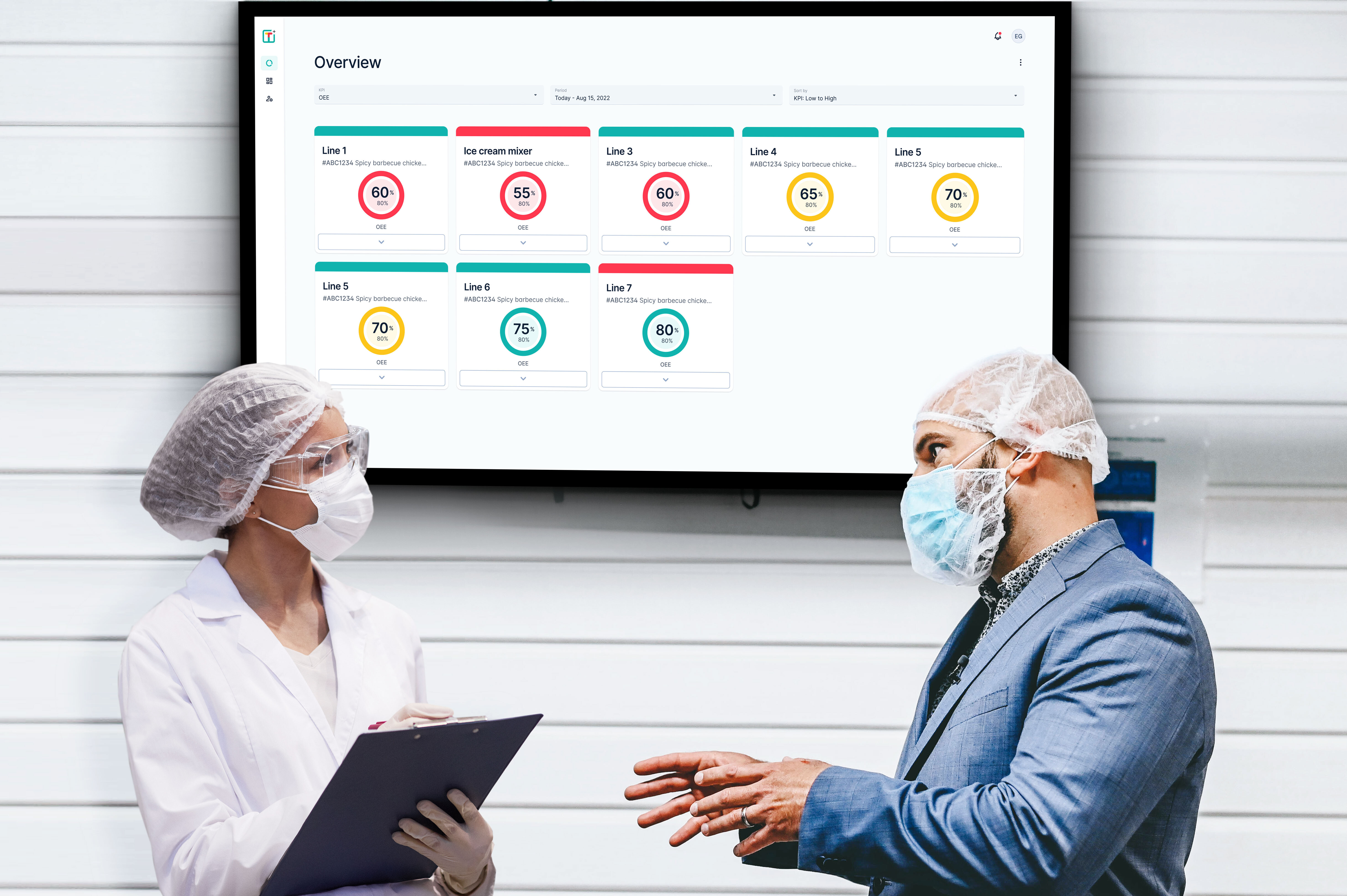
By integrating smart factory technologies such as plant analytics dashboards with the deployment of autonomous equipment, operations will be further streamlined, more productive and efficient, and safer as manufacturers deploy advanced plant-floor robotics.
Industry 4.0 has enabled major progress in integrated supply chains. As we noted in a recent article, the title of CSO, or Chief Supply Chain Officer, is increasingly used in manufacturing. We can envision a day when value chains are globally integrated across manufacturers. One day, large e-commerce sites will use user behavior — such as product reviews, shares, and purchase patterns — to forecast demand in real time and pass that information to tier-one manufacturers. Those companies, in turn, will have deep integrations with their suppliers and, using AI, the supply chain will adapt globally to consumer behavior in real time. We can therefore expect the concept of Just-In-Time manufacturing to be used massively on a global scale, spanning vast value chains.
Smart factory data analytics solutions like Worximity's will sit on top of parts of these systems and within broader ecosystems to provide the data and insights humans, cobots, AI systems, and autonomous robots will need to keep these systems running.
Efficiency and decision-making in manufacturing will improve further thanks to greater access to data through smart technologies and as executives, managers, and operators themselves gain access to real-time information. This will increase the accuracy of data used in decision-making and shorten decision cycles, giving manufacturing and operations leaders the ability to quickly improve and streamline operations.
We have reached a level of Industry 4.0 where it is possible to surface insights about what is happening at the machine or equipment level, at a specific location in the plant, and at the plant level overall. Manufacturers get a real return on investment.
As larger supply chain systems evolve and autonomous automation systems are brought to interface with fixed machines, Worximity will be at the heart of Industry 4.0 advances.
Additional resources on Industry 4.0:
What is Industry 4.0? Here's A Super Easy Explanation For Anyone
Ways to Gather Real-time Manufacturing Data for Productivity Improvement
How operations managers are embracing Industry 4.0
Industry 4.0: Boost productivity through training
Becoming a digital champion in Industry 4.0
Succeeding in Industry 4.0 with agile leadership
6 HR Tips for Successful Transition to Industry 4.0
Strategic Roadmap for IIoT Success
How CFOs Can Increase EBITDA using IIoT
Want to learn more about Industry 4.0? Get the ebook here!