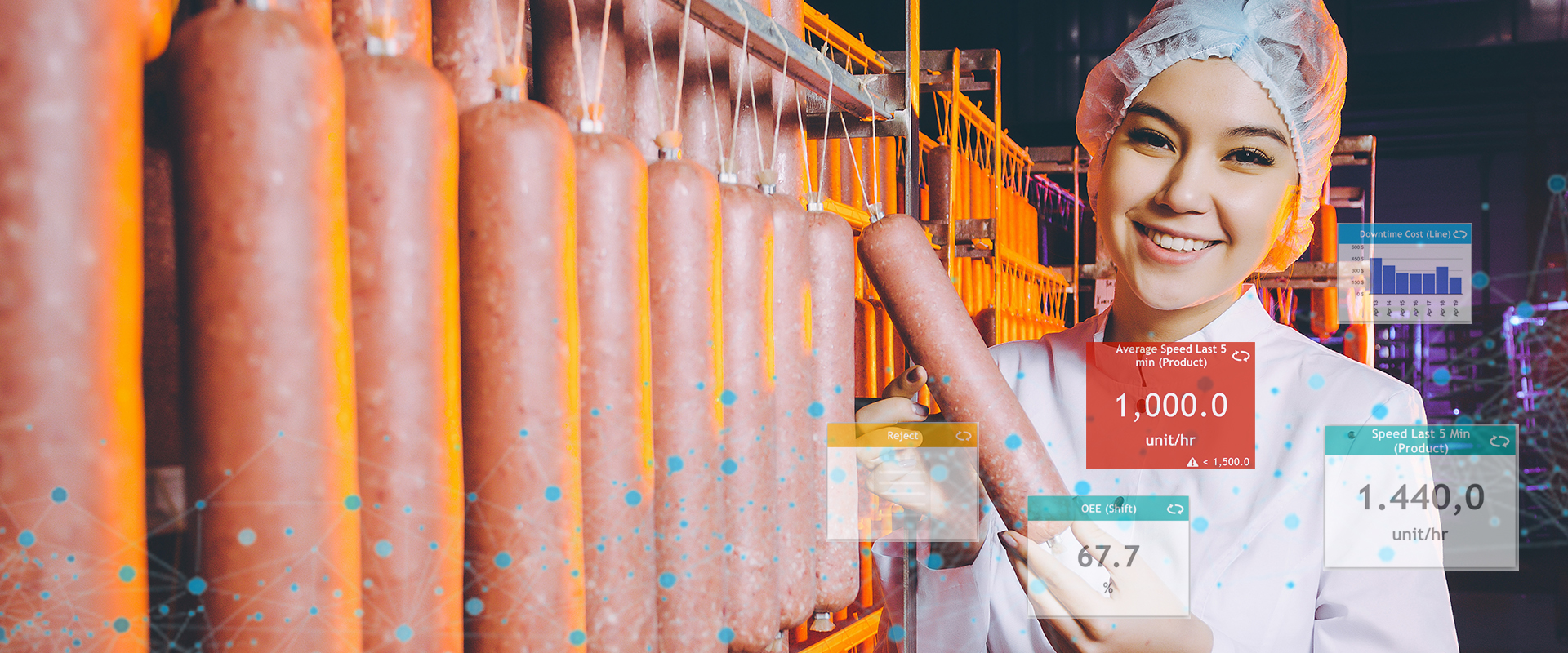
The two introductory articles of our series tackled the primary and secondary procedures pertaining to the smart processing of deli meats. This third feature presents the activities related to the conditioning of these types of meat.
On the one hand, because of their intense energy use, cooking ovens are expensive to operate. In order to create maximum value, ovens must be as productive as possible. When bottlenecks or underproduction occur during the stuffing or other upstream processes, not only is lost production costly, but the costs also multiply when it comes to the cooking process.
On the other hand, the curing process varies, and while the Tileboard real-time dashboard has been successfully implemented in many food processing operations, we recommend that you consult with Tileboard’s technical team to be more specific about your production line needs and any monitoring during the curing process.
Cooking
The meat producer sends the meat in a truck to the continuous cooking oven to be smoked if desired, and then cooked. Before starting the cooking process, the product should be rinsed and dried to eliminate surface bacteria accumulated during the Secondary Process.
The meat can now be smoked and then cooked. The meat producer sends the meat into the smoke house or the continuous cooking oven with the smoking process built-in to it. The minimum cooking temperature should be 155°F or 68°C. Once the meat has been uniformly cooked, it must be cooled quickly to prevent the growth of other bacteria.
Chilling
Once the meat has been smoked and cooked, it goes through a cold shower with ice water, tap water or brine. The showering helps maintain the product humidity, helps cool the meat quickly, and helps stop the meat from shrinking or wrinkling.
Key Performance Indicators
The main KPIs we've noticed are mainly monitored during such operations are the following:
- Uptime
- Batch quantity
- Batch time
Learn more about our TileConnect sensors by clicking here and see how you can benefit from this technology in your own factory.