Stories of major efficiency and productivity gains following the rollout of connected factory solutions are common, but how does it actually work? The answer is simple: a connected factory enables many improvements throughout the production process, and they add up to impressive results. Here is a summary of how to maximize those improvements in three steps.
Step 1 - Connect
Identify what you want to measure and where you want to measure it to make your factory smart. Look at the manual or paper-based processes you currently use to collect data, along with the KPIs you already track (units produced, machine availability, downtime, and so on). Then list the information you wish you had. Would it be that hard to capture this data with sensors? Often, information that is extremely painful to track manually is easy to capture automatically with a device. Spot overlaps and gaps in the data you have versus the data you want, then see whether sensors can be connected to fill those gaps.
Step 2 - Measure
The volume of data captured by sensors in a smart factory is significant. Make sure your IT infrastructure can store and protect it, and provide authorized access to your data or leverage a secure cloud solution. Keeping everything locked away and inaccessible is no longer an option for manufacturers who want to stay competitive. The availability and usefulness of tablets and smartphones also means you no longer need to be tied to a desktop machine, whose main downside is obviously being stationary.
Rolling out a secure mobile solution can have a major productivity impact. Simply having access to up-to-date information from anywhere changes everything. Managers can physically be where they are supposed to be during strategic planning sessions without worrying that something is happening at the plant in their absence.
Knowing which KPIs are moving, how, when and why lets you fine-tune every production cell, every step, every motion until you achieve consistent high performance across the entire plant.
Step 3 - Analyze
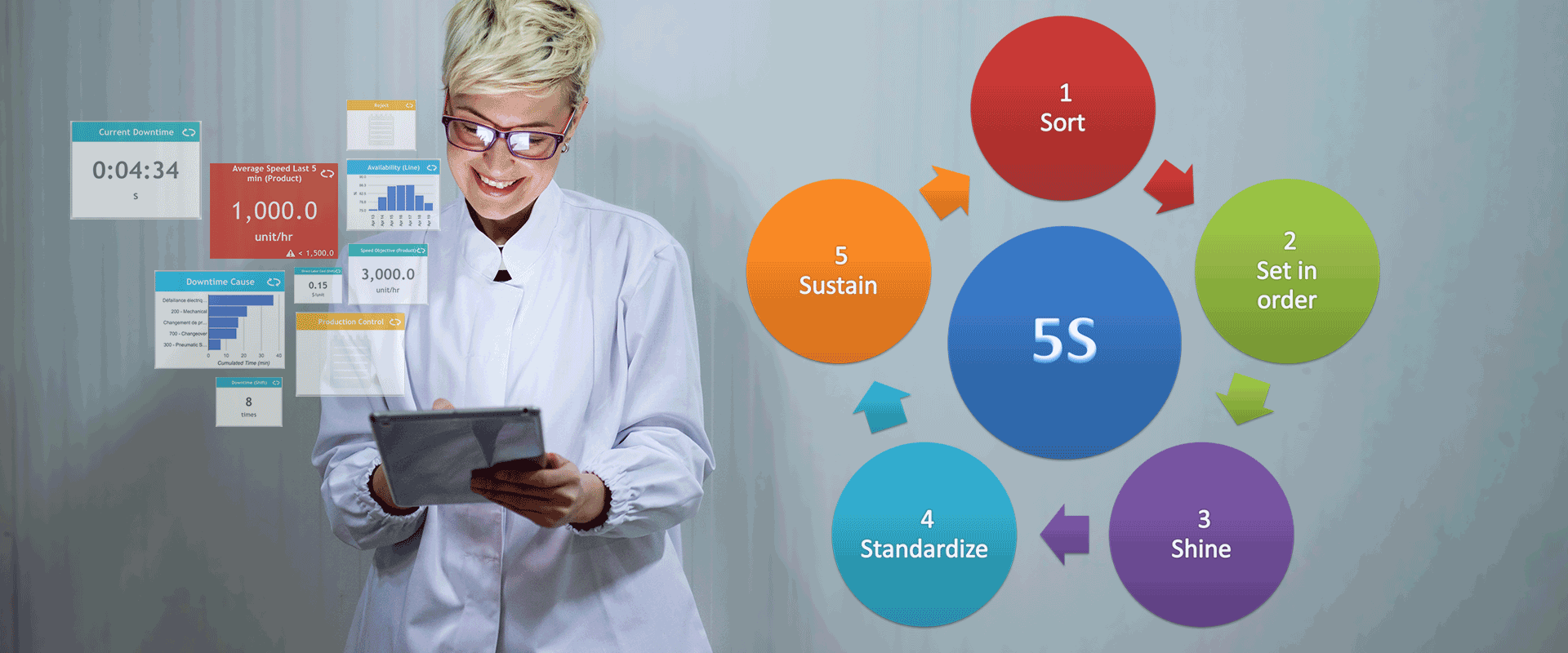
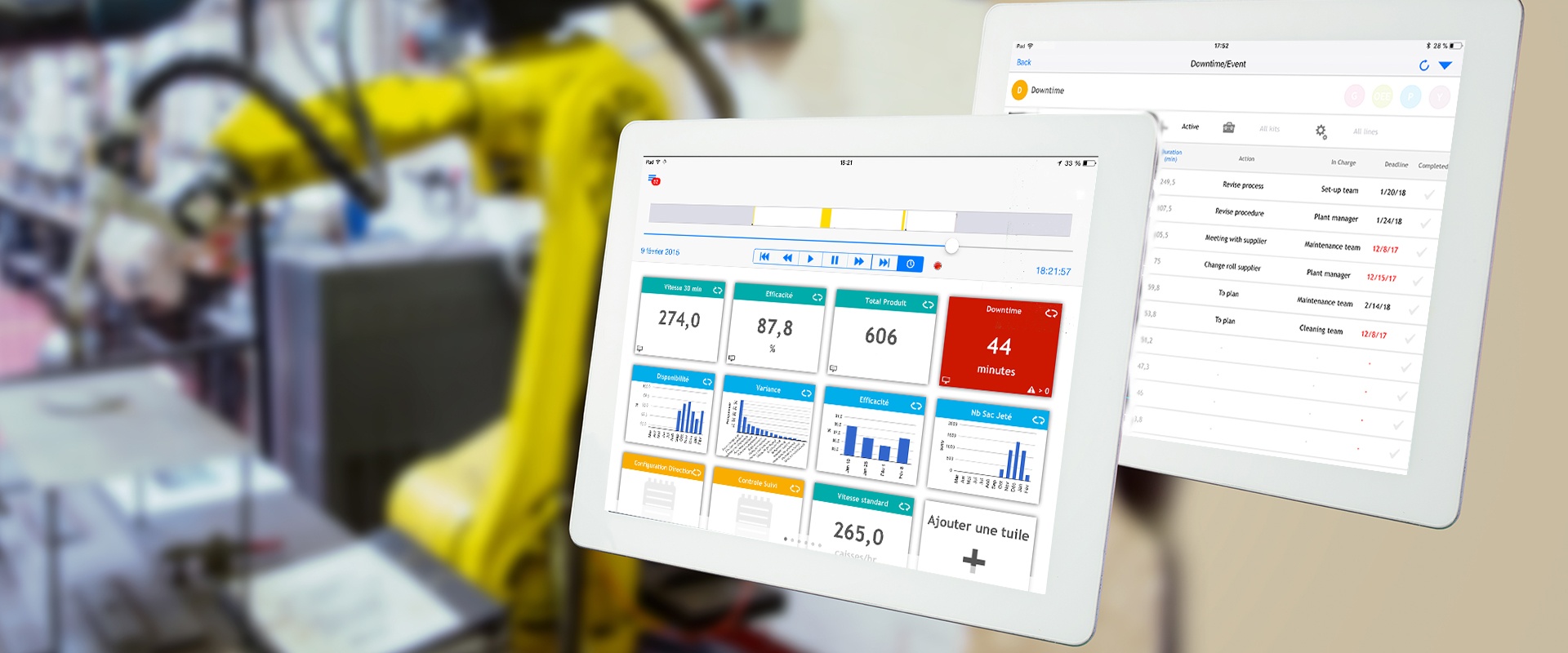
Data analysis is the reason a smart factory outperforms any non-connected plant. Humans cannot compete with machines on data collection and analysis. But humans remain essential to the process. Information has to be organized and dashboards must be designed so that the information displayed is immediately understandable. Using analytics tools, people are free to interpret the data and act on those interpretations.
Time is what we constantly lack. An IoT solution saves precious time across the production process, giving everyone in the plant more bandwidth to act on information rather than gather and assemble data.
The old IT saying "garbage in, garbage out" still holds. You need to collect the right data, then store and organize it in a logical system. You also need to design an analytics structure that works for every part of the business. What does finance need to see? What does procurement need? What do planning and scheduling owners need to know? The same central database is accessible to everyone, but the information each person sees is tailored to their needs. Because everyone works off the same data, plans and strategies across departments have a good chance of staying in sync. People can react and make decisions based on the company's actual state, not the state from a few weeks ago.
Improvements are not limited to the plant either. A meeting can be far more productive when everyone has the same information and no one is waiting on a report. With a full dataset behind a clear, relevant visual, it is much faster to see what is working and where to focus.
Learn more about automatic real-time data collection