
Across industries, executives recognize an inadequate preparation for disruptions resulting from digital trends. In a 2015 global survey conducted by the MIT Sloan Management Review and Deloitte, around 90% of managers and executives say they anticipate digital disruption in their industries. However, only 44% report that their organization is prepared for such changes.
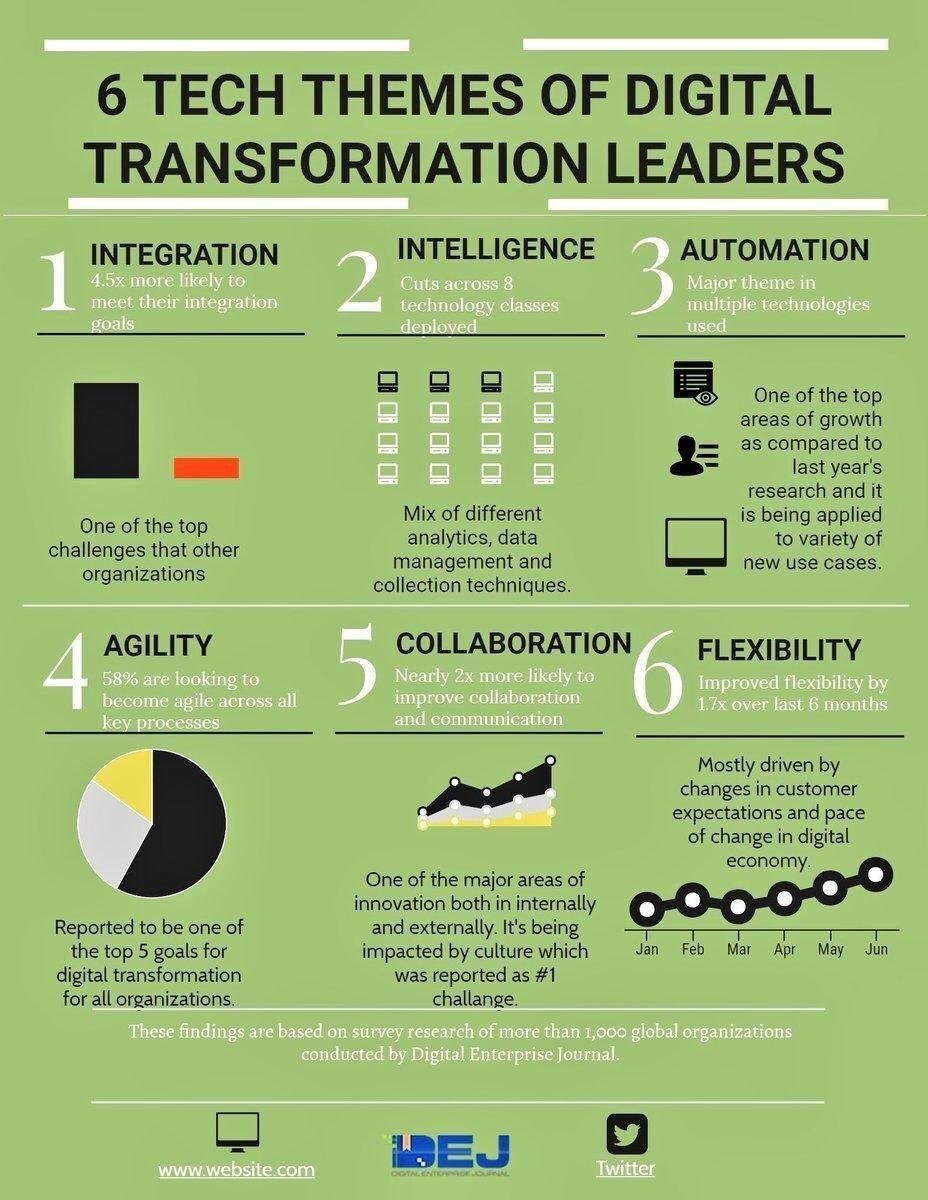
In a different survey, the Digital Enterprise Journal researched over 1,000 global organizations for particular themes of digital transformation leaders and highlighted the following:
Themes for Manufacturing Leaders
- Integration: They integrate digital technology into existing areas of their business, which essentially changes the company’s overall strategy and approach for delivering services to consumers. Integration is one of the top challenges that organizations encounter when preparing for disruption, because it requires a company to continuously challenge the status quo and be comfortable with experimentation and failure.
- Intelligence: They use a combination of data-driven initiatives, analytics, collection techniques to make decisions and invest in innovation.
- Automation: With rapidly changing business demands, identifying opportunities for automation becomes a key priority to ensure a healthy workflow. Not only does automation ensure faster and more efficient operations, it also improves overall security, alleviates the effects of IT staff shortage, and prepares organizations for upcoming digital trends, including artificial intelligence (AI).
- Agility: Agility involves continuous iteration and improvement on results produced and acceleration of internal and external processes. In this key theme, leaders should also focus on meaningful and positive interactions with consumers through social media and marketing campaigns. This enhances overall consumer experience and allows for a feedback to customize services and prepare for digital disruption.
- Collaboration: They encourage and foster collaboration across team members and internal operations within the company. An organization’s ability to prepare and respond quickly to digital disruptions hinges on a revolutionized corporate culture. Burton Lee, a Venture Capitalist and lecturer at Stanford University recently shared these action steps for a collaborative factory culture. Various tools including mobile devices, tv screens on the factory floor, and evergreen applications for software can facilitate effective communication.
- Flexibility: Tailoring a company’s services according to a consumer’s needs and customizing design with rapidly changing demands are examples of flexibility. It is important to develop an evolving effective strategy rather than continue working towards one specific goal. Furthermore, building an interactive platforms to bridge communications between stakeholders will pave the way for success.
Resources:
https://sloanreview.mit.edu/projects/aligning-for-digital-future/
https://enterprisersproject.com/what-is-digital-transformation
Related blog articles