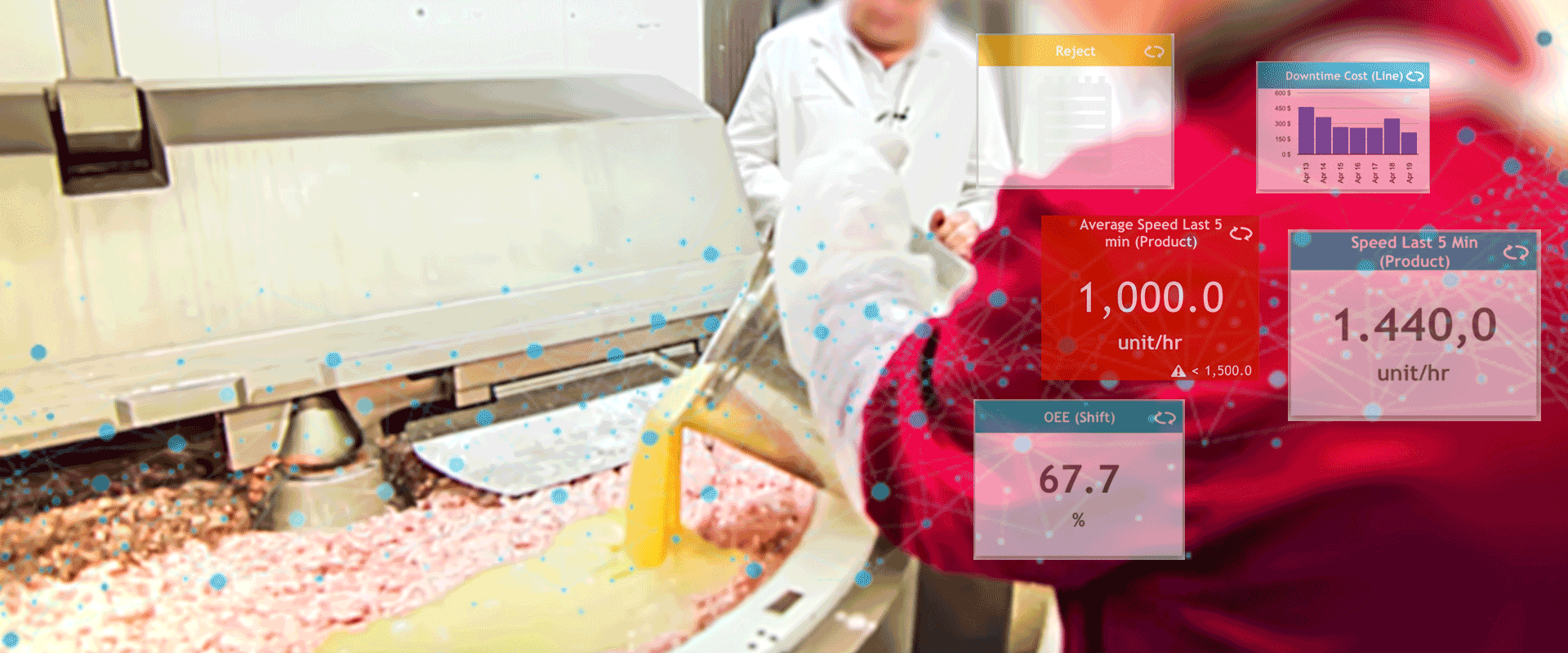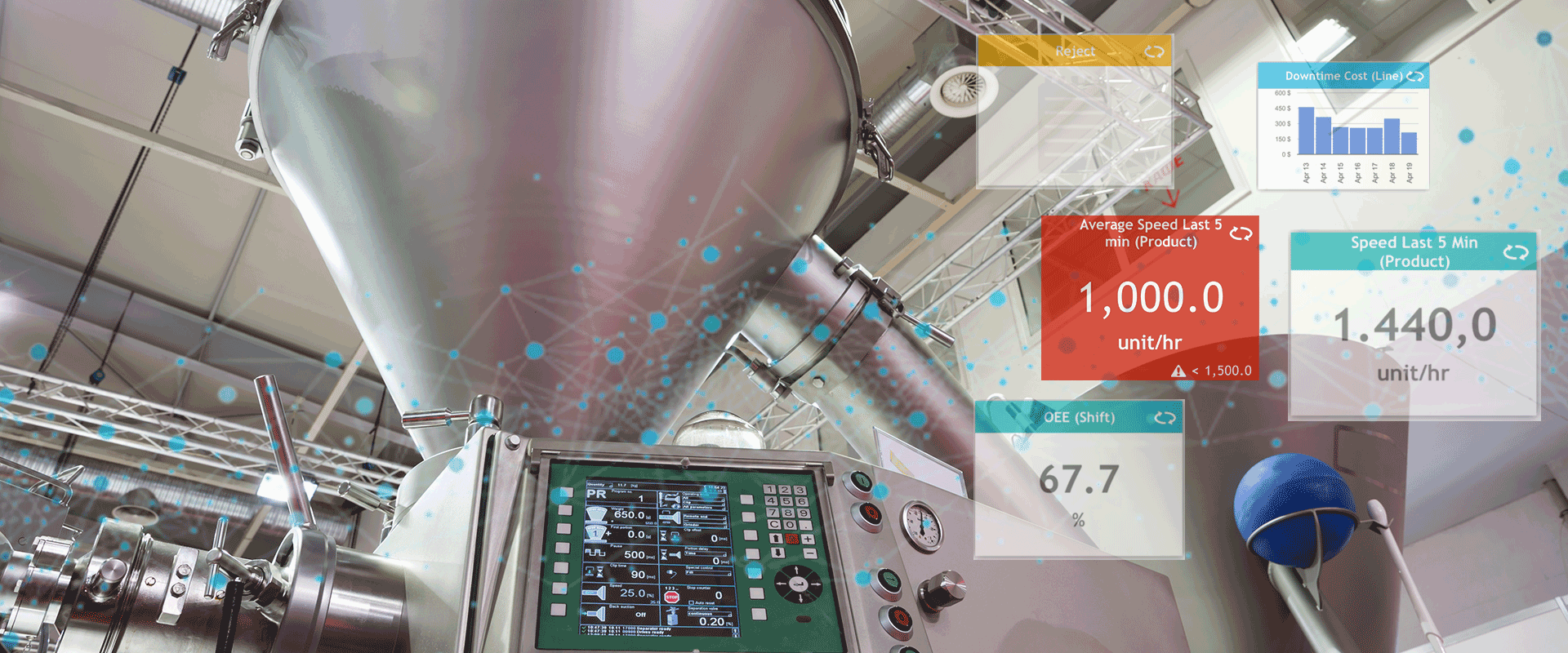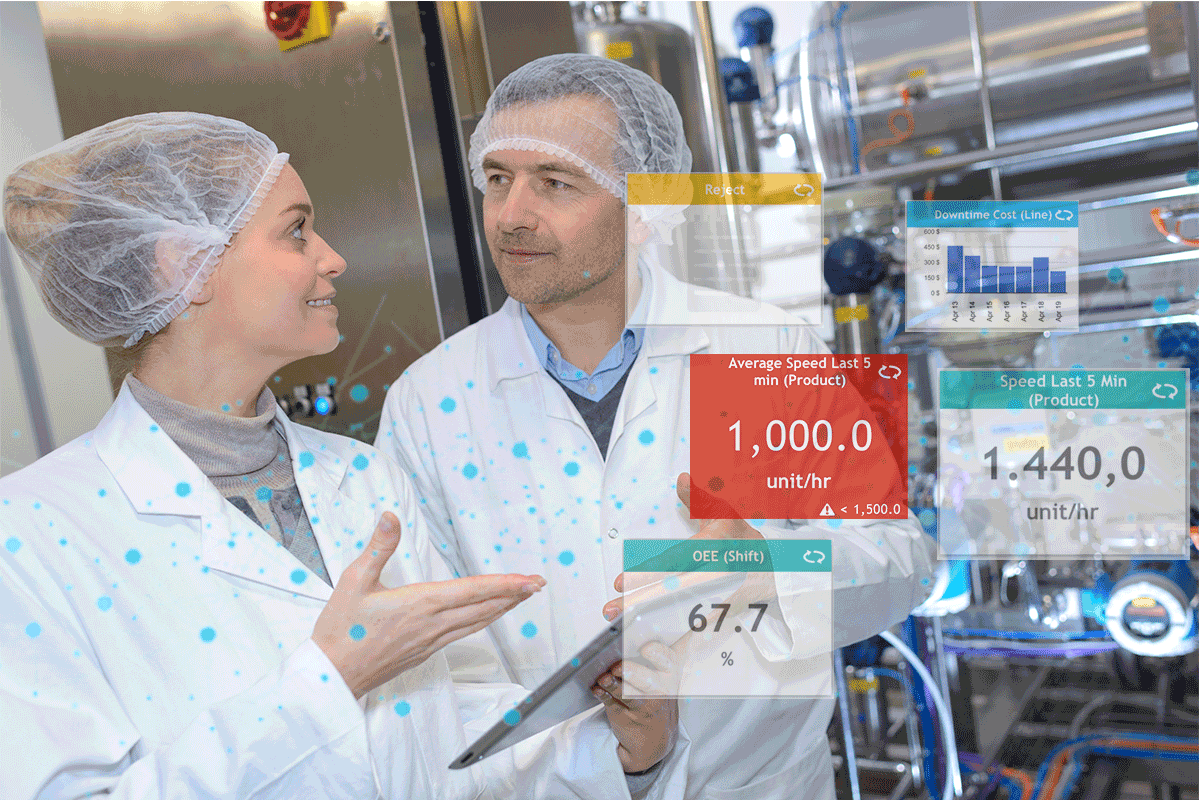
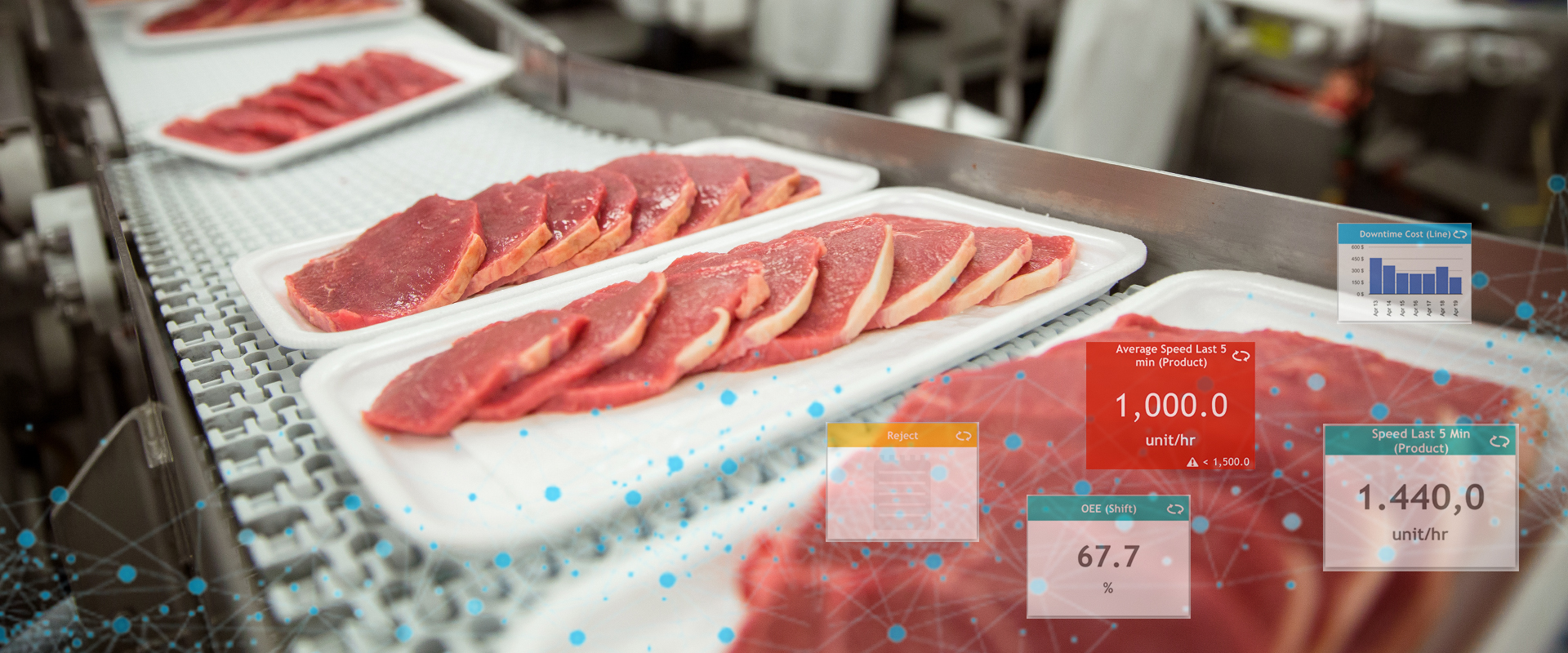
With this first rubric of our Smart Meat Processing series, we will uncover the primary elements required at this stage of the process. During primary processing, the meat producer focuses on throughput and yield and should pay close attention to the entry weight at the batching mixer in order to compare it the final product weight. Data collected directly from the checkweigher at the end of the line will allow managers to have real-time key performance indicators on yield and productivity.
Grinding
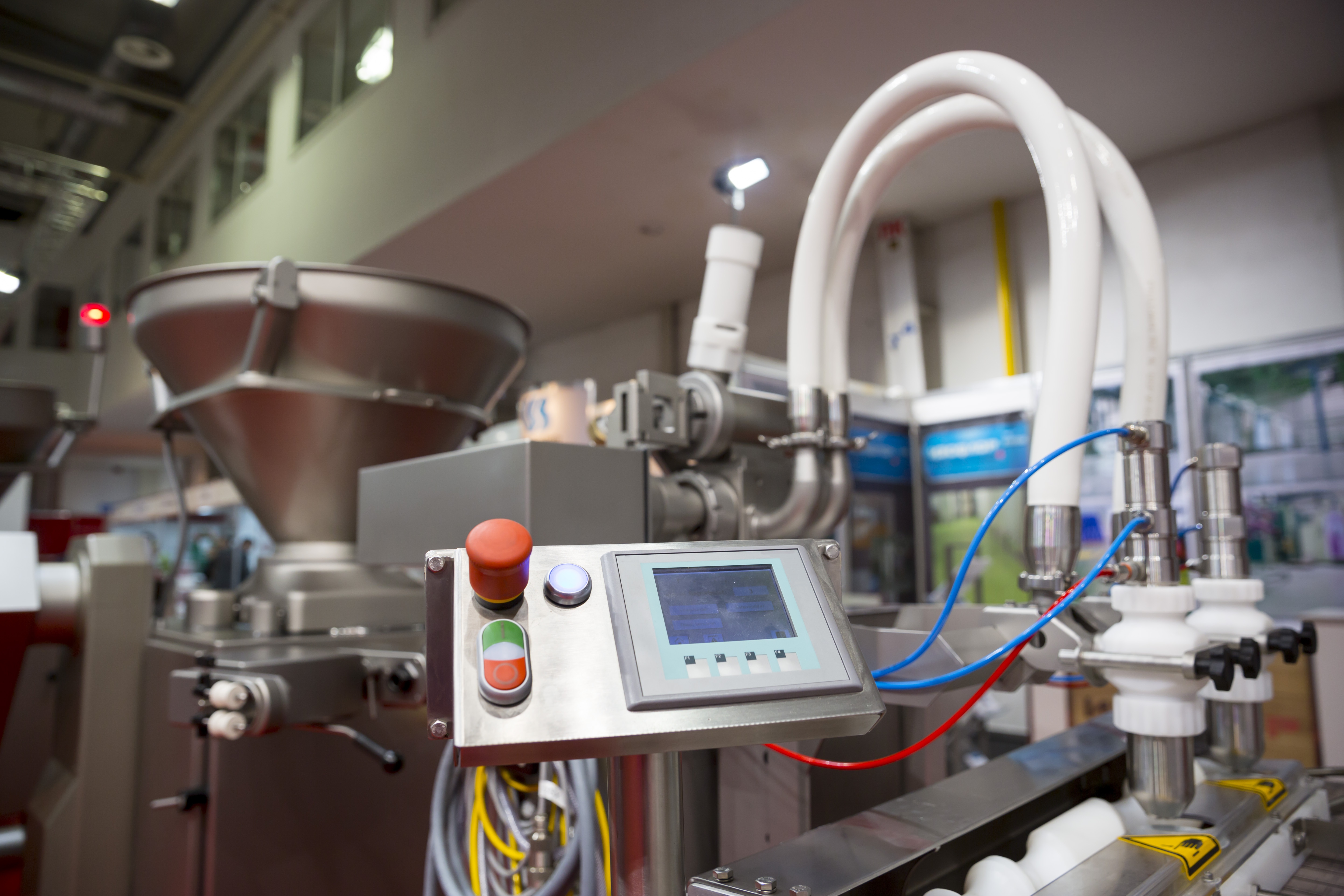
The first step in many meat processing value chains is grinding. Any brand of meat grinding machine can be connected and monitored in order to improve productivity and lower production costs.
Meat grinding is a critical value added step as it feeds the downstream production areas to complete the particular meat processing value chain. Unanticipated production interruptions in the meat grinding area can cause significant factory losses because of all the possible production areas and labor crews that can become idle, due to lack of sufficient input material. Clearly, for many meat processing value chains, downtime in grinding can be a cost-multiplier because of the production losses that can be incurred across the plant.
Additionally, because the grinding process can feed multiple next-stage processes, it can be difficult to assess whether the grinding area is fully productive or is causing unnecessary bottlenecks. It can also be difficult to assess if the area provides the necessary capacity to drive various production scenarios that a meat processing plant can be managed to.
The Worximity Smart Factory Roadmap helps you determine the best course of action to reduce production costs with real-time monitoring using TileBoard.
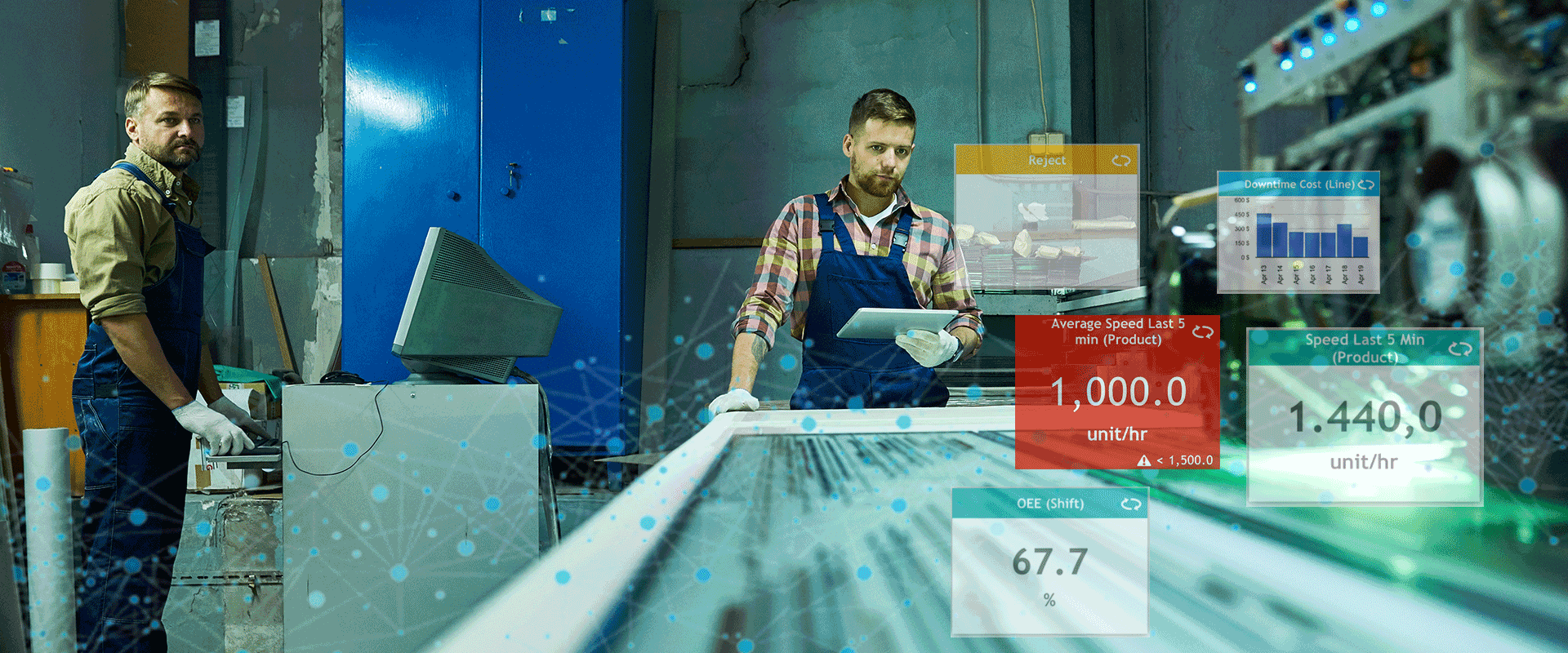
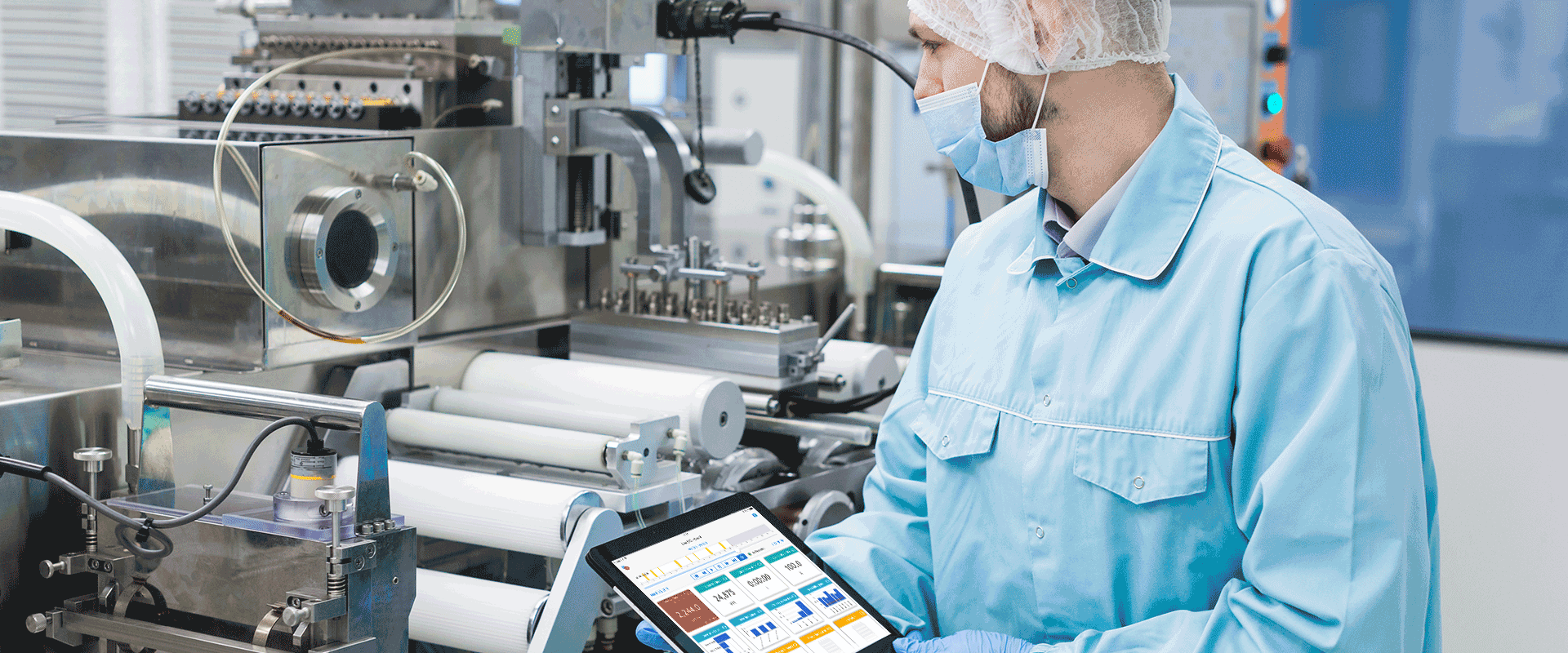
The TileBoard real-time dashboard assists you in visualizing the measures that should be taken. It helps you to monitor productivity, to do Causal and Pareto Analyses in order to understand causes of downtime and bottlenecks, and to understand the relationships between the grinding area operating performance and the impact on the rest of the factory. TileBoard is connected to your your equipment with the TileConnect smart sensor device.
Mixing - Batching
Typically, the next step in the meat processing value chain for deli sausage is mixing. A well-managed mixing process is essential for quality deli sausage product. Most commercial meat mixers are operated through a PLC (Programmable Logic Controller) that automatically handle recipes.
Ground protein mix, spices, and flavorings are added at this point. It's important for them to be mixed sufficiently to provide a consistent flavor throughout. Ice is also added to deli sausage mix. The colder you get the sausage, the higher quality, the firmer the texture, and the juicier it will be for consumers during home cooking. Under-mixing leads to an uneven product and over-mixing creates a mashed product that is unappealing to consumers.
Occasionally, operator error or lack of training can mean that the optimum mixing process for a specific recipe is not always followed. Monitoring the mixing process with TileBoard provides a quality backstop to ensure product consistency and to minimize the chances of producing a poor quality product.
Key Performance Indicators
Different KPIs can be measured at this step of the process amongst which figure the following:
- Batch quantity
- Batch mixing time
- Batch weight (weigher & checkweigher connectivity)
With connected grinders like Weiler and Marel, the production manager can precisely follow grinding parameters to optimize yield.
Visit our website's Ressources page for more case studies and ebooks on the 4.0 industry.