4 Jul
2018

The 3 Central Tasks of Data-Driven Transformation

BCG's cost-effective and evidently successful three-step approach addresses a timeline for digital transformation in companies across sectors. The approach begins with pilot projects of rapid digitization to a final data governance system leading to a full-fledged digital transformation.

Analytics
Industry 4.0
Les 3 tâches principales d'une transformation basée sur les données


Data-driven transformation has taken to drive change in public and social sectors. Such change has motivated most executives to find reliable ways to propel their companies into data-based futures. Along with motivation, fear to keep up with competitors and ensure survival of their businesses pushes CEOs to implement a focused, pragmatic, and agile approach to data transformation. Working with different industries, BCG has addressed this challenge and developed a cost-effective, sustainable, and progressive three-phase approach:
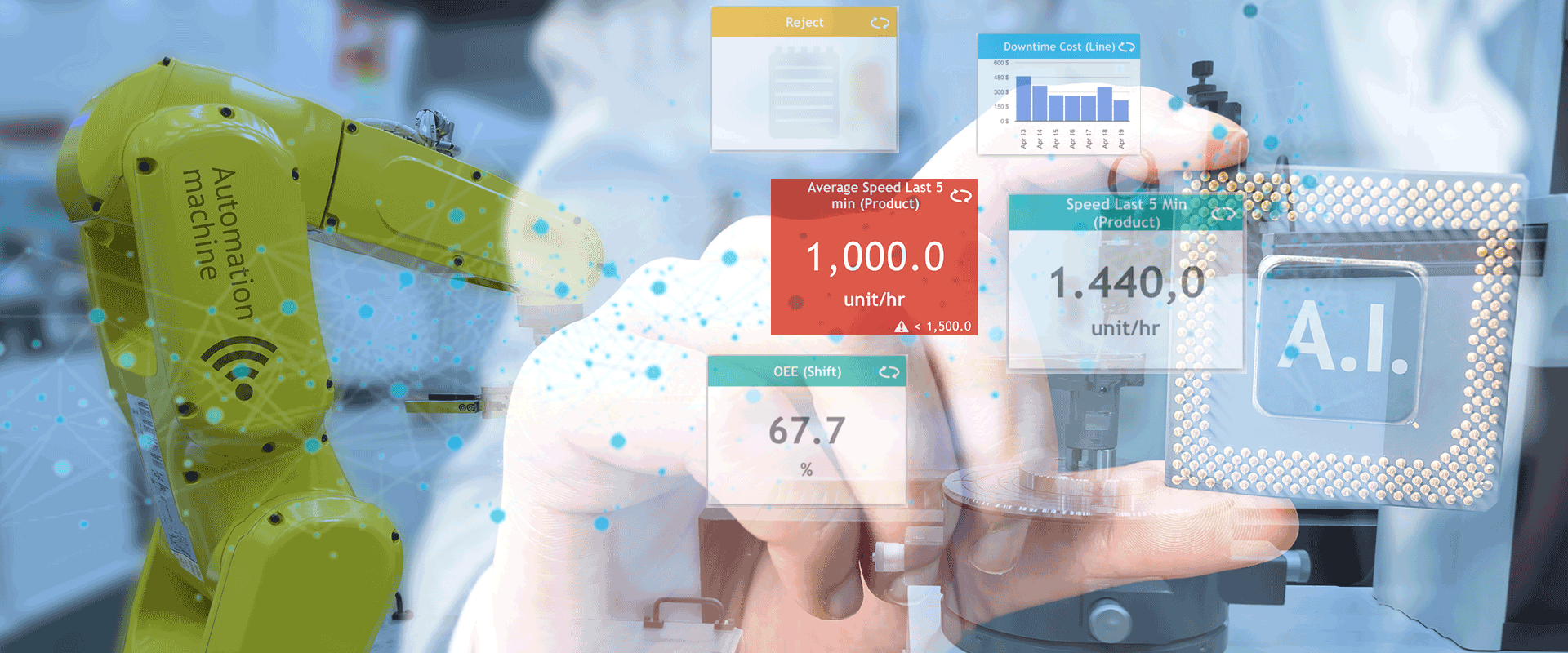
 

Worximity - Data driven transforamtion with Smart Factory technologies

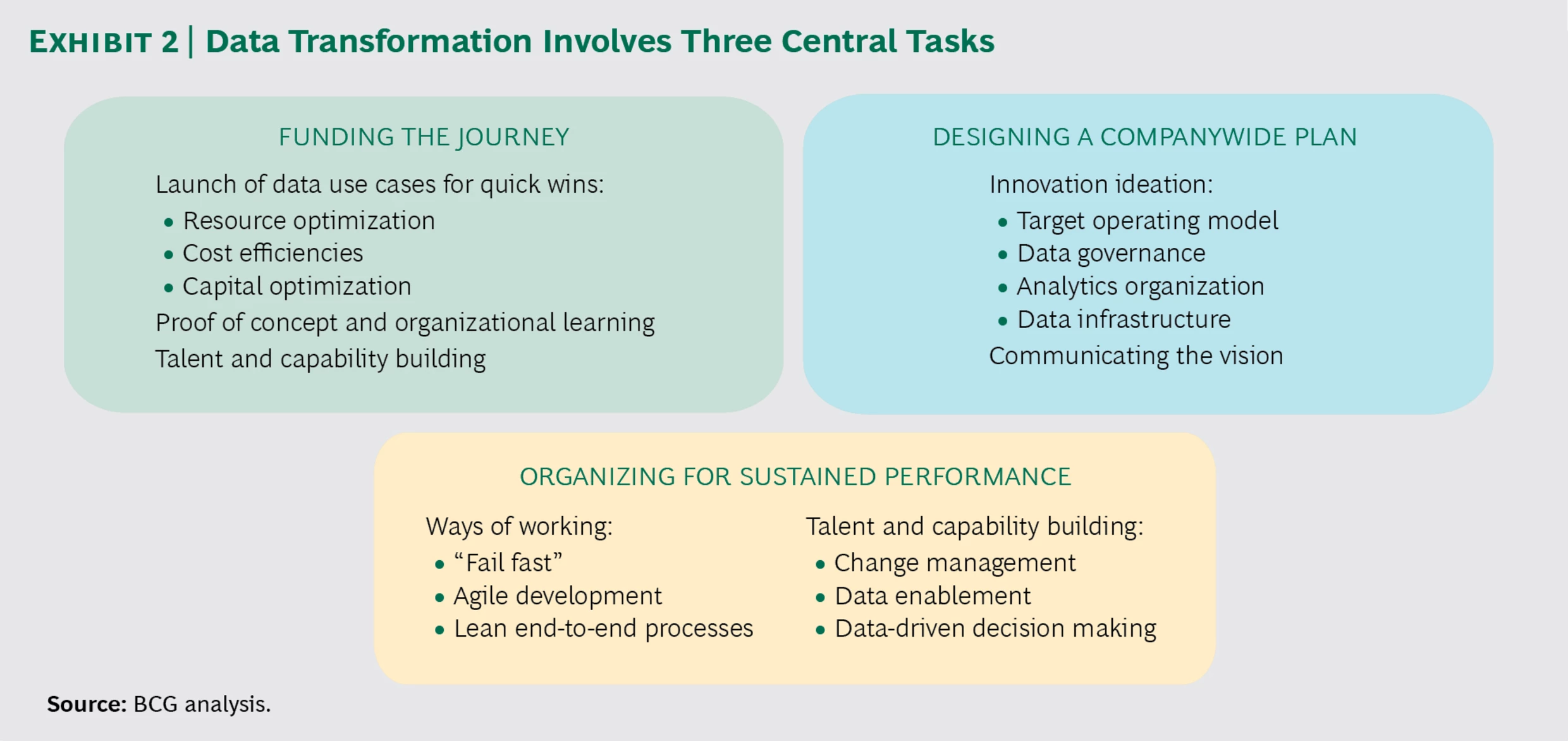
1. Funding the journey 

Entails laying the foundation with rapid digitization efforts that address the basics of broader transformation and deliver returns that can fund later phases. The benefits of these pilot projects help to show how an example company can benefit from digitization in the long run.

2. Designing a company-wide transformation 

Focuses on optimizing performance through digitization. In this phase, companies should draw on wins from phase one and create a detailed roadmap for extending transformation to other areas of the enterprise. Additionally, identifying benchmarks to digitize functions and operations allows companies to prepare for a full-fledged digital transformation. In this phase, it is also helpful for the organization to start “industrializing” data analytics—using analytics as a resource for each operation.

3. Organizing for sustained performance 

Involves building long-term systems and working towards using new data-driven strategies. As the company continues to sketch its transformation roadmap, it should standardize data-based systems for an effective output. Finally, to ensure sustainability of adopting digital processes, companies should constantly encourage new ways to use data.
 

Data-Driven Transformation_ex02_tcm-156856


SOURCE:  https://www.bcg.com/fr-ca/publications/2017/digital-transformation-transformation-data-driven-transformation.aspx?linkId=52354074&redir=true

Want to learn more?
Download the ebook
Related blog articles

Articles connexes

Retour au blog
Nous vous remercions ! Votre demande a bien été reçue !
Oups ! Un problème s'est produit lors de l'envoi du formulaire.
10
Août 2018

Why Monitor Mixing Process? Deli Meat Processing Series Part 2

English
16
Juillet 2018

Video-Benefits of Industry 4.0 in beverage factories

English
27
Août 2018

Three Holistic Approaches to IIoT Manufacturing

English

Articles connexes

Retour au blog
Nous vous remercions ! Votre demande a bien été reçue !
Oups ! Un problème s'est produit lors de l'envoi du formulaire.
23
Juillet 2021

When to Optimize or Purchase New Food Manufacturing Equipment

Find out how optimizing with Smart Factory technology can save you money and maximize the manufacturing equipment already on your production line.

English
15
Oct. 2021

The Hidden Cost of Downtime in Food Processing

From equipment availability to brand reputation, here is what you need to know about the costs of downtime in your food processing production.

English
27
Août 2021

How to Improve Throughput in Manufacturing and Put an End to Subcontracting or Unplanned Overtime

What’s impacting your throughput isn’t always obvious. Read more to learn how to improve your throughput in manufacturing.

English