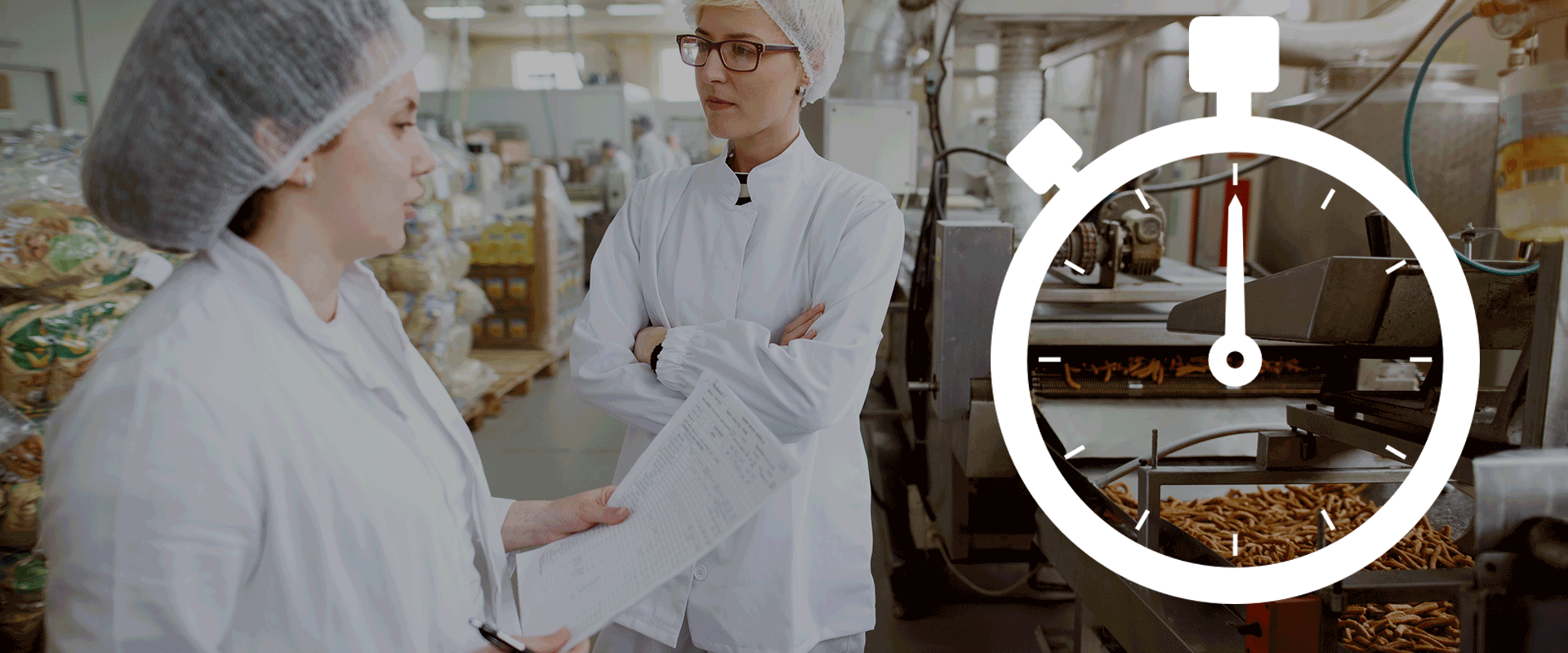
With an expected compound annual growth rate of 28.64 percent between 2018 and 2023 according to Mordor Intelligence, it is safe to say that artificial intelligence will strongly affect the food and beverage industry in the upcoming years. Its prevalence can be explained by the fact that AI greatly impacts two important spheres of the industry: food safety and quality assurance. With this technology, experience learning is enhanced for computers with constant data analysis, increasing the precision degree and efficiency of tasks otherwise completed by humans. Here are three applications of machine learning in the industry.
Real-Time Effective and Efficient Monitoring
Amongst different monitoring techniques, smart sensors allow for data recording, identification of areas of improvement and may also contribute to making critical decisions related to food safety and that is beyond their temperature, humidity, pressure and time monitoring abilities. Other methods used for monitoring consist of spectroscopy, lasers, X-rays and cameras which analyze intrinsic and extrinsic characteristics of production. This represents a huge advancement from conventional sorting systems. The procedure evolved from separating was is programmed as acceptable from the rejected into sorting products based on their optimized use by using intuitive decision making based on the best yield.
Increased Traceability
To properly execute strategic safety interventions when faced with a recall, a large amount of data needs to be gathered, interpreted and validated and results are to be shared in a minimal amount of time. Thanks to AI systems, historical data can be compared and be used to predict potential events across multiple timelines from different regions.
Amazon can identify a food safety issue before the manufacturer issues a recall with their natural language processing system, which continuously oversees customer feedback by overlooking numerous emails, phone calls, instant messages and social media platforms. The company's vice president of health and safety, sustainability, security and compliance stated that a faulty product can be blocked up to, on average, 50 days before the official recall with the collection and analysis of customer feedback.
Enhanced Sanitation
With automated sanitation comes Clean-in-Place (CIP) systems, programmed to clean equipment in time cycles. By limiting human interactions with a self-cleaning system, chances of cross-contamination from foodborne bacteria are significantly reduced. The University of Nottingham is collaborating with CIP experts Martec of Whitwell on a research project for a Self-Optimizing CIP (SOCIP). Such would be set up in a way to adjust cleaning schedules based on operational use.
Embracing change and investing in continuous improvement initiatives will be of the essence for food manufacturers wishing to remain on the forefront. AI renown researcher Eliezer Yudkowsky said the following: "By far, the greatest danger of artificial intelligence is that people conclude too early that they understand it.”
Source: https://www.foodqualityandsafety.com/article/artificial-intelligence-a-real-opportunity-in-food-industry/